 …
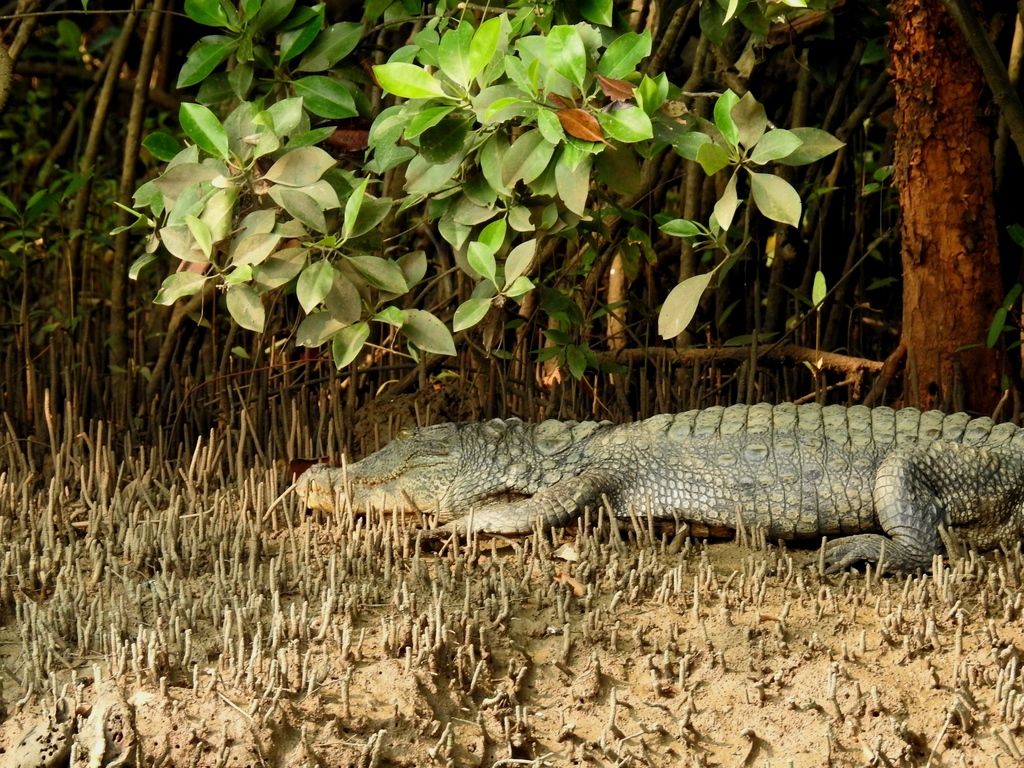
Mugger Crocodile
Crocodylus palustris
Reptilestrong against amphibians, mammals
Rare
Scales
While active with another reptile in play, it takes 3 less damage (6 with two others).
42

35
Mugger Crocodile
Crocodylus palustris
Reptilestrong against amphibians, mammals
Rare
While active with another reptile in play, it takes 3 less damage (6 with two others).
Crocodylus palustris
Photo: © Dr. Raju Kasambe (original photo) · CC BY-SA 4.0 (licence text) · cropped
Strong against: it deals 20% more damage to them. Weak against: these types deal 20% more damage to it.
The mugger crocodile (Crocodylus palustris) is a medium-sized broad-snouted crocodile, also known as mugger and marsh crocodile. It is native to freshwater habitats from south-eastern Iran to the Indian subcontinent, where it inhabits marshes, lakes, rivers and artificial ponds. It rarely reaches a body length of 5 m (16 ft 5 in) and is a powerful swimmer, but also walks on land in search of suitable waterbodies during the hot season. Both young and adult mugger crocodiles dig burrows to which they retreat when the ambient temperature drops below 5 °C (41 °F) or exceeds 38 °C (100 °F). Females dig holes in the sand as nesting sites and lay up to 46 eggs during the dry season. The sex of hatchlings depends on temperature during incubation. Both parents protect the young for up to one year. They feed on insects, and adults prey on fish, reptiles, birds and mammals.
The mugger crocodile evolved at least 4.19 million years ago and has been a symbol for the fructifying and destructive powers of the rivers since the Vedic period. It was first scientifically described in 1831 and is protected by law in Iran, India and Sri Lanka. Since 1982, it has been listed as Vulnerable on the IUCN Red List. Outside protected areas, it is threatened by conversion of natural habitats, gets entangled in fishing nets and is killed in human–wildlife conflict situations and in traffic accidents.
Excerpt from the Wikipedia article Mugger crocodile, by its authors, under the CC BY-SA 4.0 licence.
Vulnerable on the IUCN Red List: that’s what makes this card Rare.
Every Rare card has 130 points, shared between HP, ATK and DEF:
How they’re shared out:

 DEF 35