 …
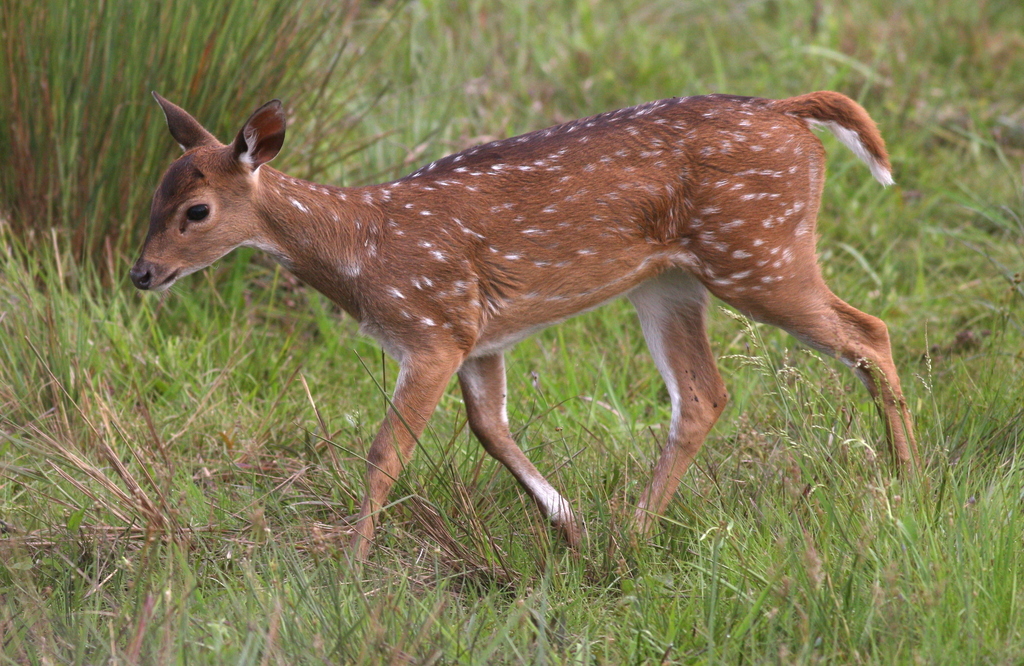
Chital
Axis axis
Mammalstrong against birds, fungi
Common
Pack
While active with another mammal in play, it hits 7 harder (14 with two others).
44

30
Chital
Axis axis
Mammalstrong against birds, fungi
Common
While active with another mammal in play, it hits 7 harder (14 with two others).
Axis axis
Photo: © Jan Ebr & Ivana Ebrová (original photo) · CC BY 4.0 (licence text) · cropped
Strong against: it deals 20% more damage to them. Weak against: these types deal 20% more damage to it.
The chital (Axis axis), also called spotted deer and axis deer, is a deer species native to the Indian subcontinent. It was first described by Johann Christian Polycarp Erxleben in 1777. A moderate-sized deer, male chital reach 90 cm (35 in) and females 70 cm (28 in) at the shoulder. While males weigh 70–90 kg (150–200 lb), females weigh around 40–60 kg (88–132 lb). It is sexually dimorphic; males are larger than females, and antlers are present only on males. The upper parts are golden to rufous, completely covered in white spots. The abdomen, rump, throat, insides of legs, ears, and tail are all white. The antlers, three-pronged, are nearly 1 m (3 ft 3 in) long.
Excerpt from the Wikipedia article Chital, by its authors, under the CC BY-SA 4.0 licence.
Least Concern on the IUCN Red List: that’s what makes this card Common.
Every Common card has 100 points, shared between HP, ATK and DEF:
How they’re shared out:

 DEF 30