 …
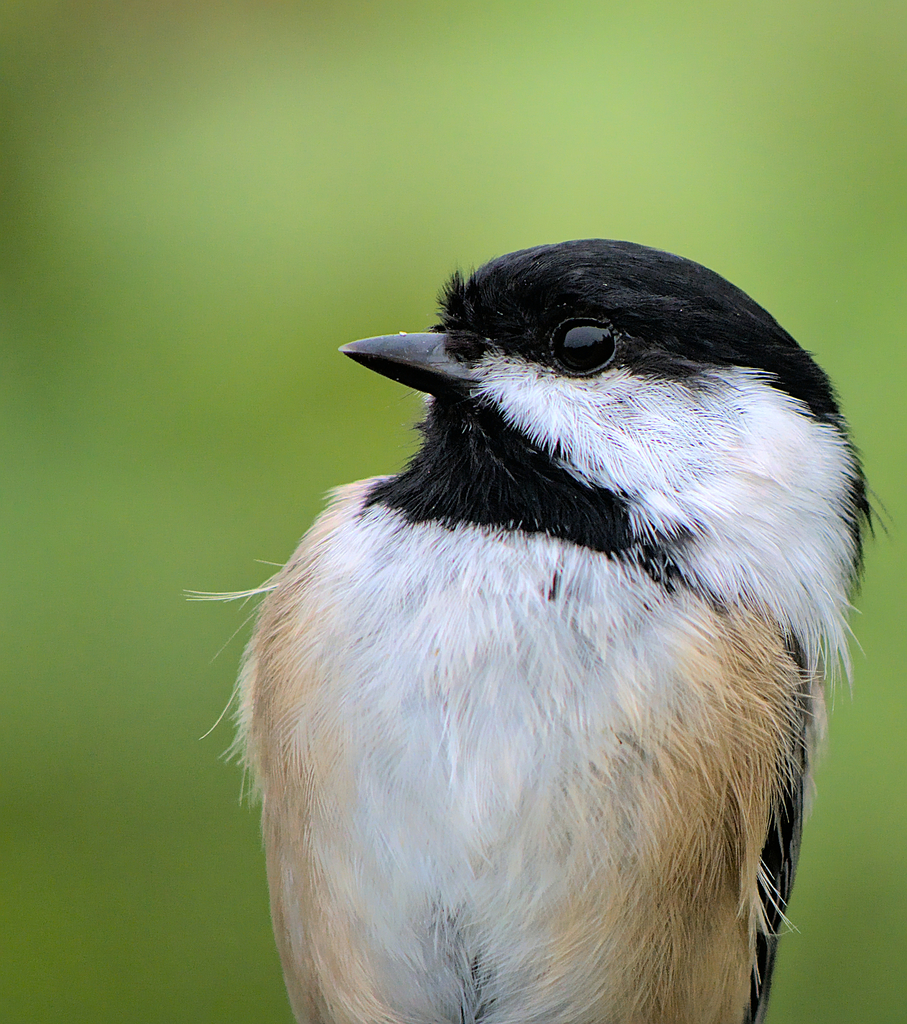
Black-capped Chickadee
Poecile atricapillus
Birdstrong against fish, reptiles
Common
Swoop
While active with another bird in play, it hits 6 harder on its first attack after entering play (12 with two others).
32

39
Black-capped Chickadee
Poecile atricapillus
Birdstrong against fish, reptiles
Common
While active with another bird in play, it hits 6 harder on its first attack after entering play (12 with two others).
Poecile atricapillus
Photo: © Blake Ross (original photo) · CC BY 4.0 (licence text) · cropped
Strong against: it deals 20% more damage to them. Weak against: these types deal 20% more damage to it.
The black-capped chickadee (Poecile atricapillus) is a small, nonmigratory, North American passerine bird that lives in deciduous and mixed forests. It is a member of the Paridae family, also known as tits. It has a distinct black cap on its head, a black bib underneath, and white cheeks. It has a white belly, buff sides, and grey wings, back, and tail. The bird is well known for its vocalizations, including its fee-bee song and its chick-a-dee-dee-dee call, from which it derives its name.
The black-capped chickadee is widely distributed throughout North America, ranging from the northern United States to southern Canada and all the way up to Alaska and Yukon. It feeds primarily on insects and seeds, and is known for its ability to cache food for use during the winter. The hippocampus of the black-capped chickadee grows during the caching season, which is believed to help it better remember its cache locations. The black-capped chickadee is a social bird and forms strict dominance hierarchies within its flock. During the winter, these flocks include other bird species. It has the ability to lower its body temperature during cold winter nights, allowing it to conserve energy.
Black-capped chickadees build nests in tree cavities, with the nesting season starting in late April and lasting until late June. They lay on average 6–8 eggs, which hatch after 11–14 days. Juveniles fledge 12–16 days after hatching.
Abridged excerpt from the Wikipedia article Black-capped chickadee, by its authors, under the CC BY-SA 4.0 licence.
Least Concern on the IUCN Red List: that’s what makes this card Common.
Every Common card has 100 points, shared between HP, ATK and DEF:
How they’re shared out:

 DEF 39