 …
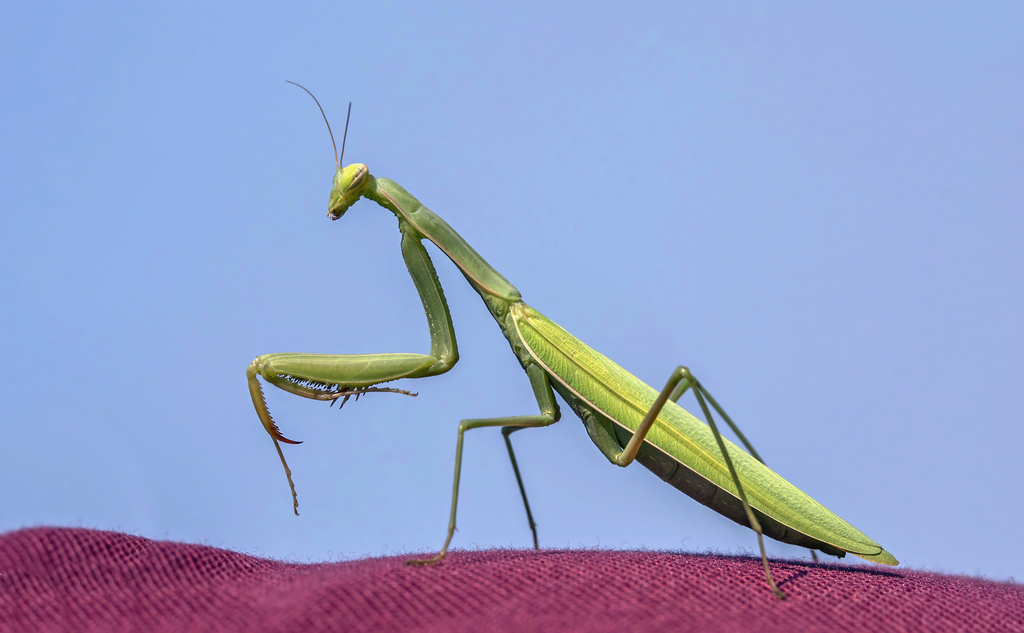
European Mantis
Mantis religiosa
Insectstrong against fungi, fish
Common
Swarm
While active with another insect in play, each of its attacks also hits the opposing bench for 10, without knocking them out (20 with two others).
31

34
European Mantis
Mantis religiosa
Insectstrong against fungi, fish
Common
While active with another insect in play, each of its attacks also hits the opposing bench for 10, without knocking them out (20 with two others).
Mantis religiosa
Photo: © Charles J. Sharp (original photo) · CC BY-SA 4.0 (licence text) · cropped
Strong against: it deals 20% more damage to them. Weak against: these types deal 20% more damage to it.
The European mantis (Mantis religiosa) is a large hemimetabolic insect in the family Mantidae, which is the largest family of the order Mantodea (mantises). Their common name praying mantis is derived from the distinctive posture of the first pair of legs, which can be observed when the mantis is in repose, resembling a praying position. Both males and females have elongated bodies with two pairs of wings. The most striking features that the species (and all mantodeans) have are a very mobile, triangular head with large compound eyes and their first pair of legs (the 'raptorial legs'), which is highly modified for the efficient capture and restraint of fast-moving or flying prey.
In Germany, M. religiosa is listed as Gefährdet [endangered] on the German Red List on the basis of an assessment from 1998. It is not supposed to be caught or held as a pet. At a global level, it is assessed by the IUCN as least concern.
Excerpt from the Wikipedia article European mantis, by its authors, under the CC BY-SA 4.0 licence.
Least Concern on the IUCN Red List: that’s what makes this card Common.
Every Common card has 100 points, shared between HP, ATK and DEF:
How they’re shared out:

 DEF 34