 …
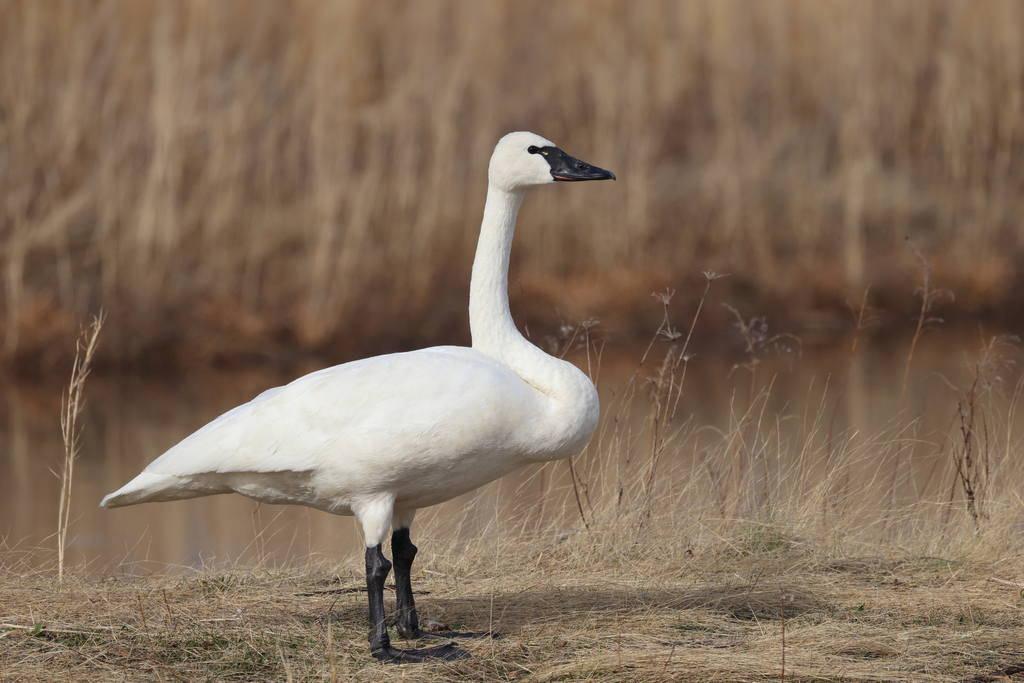
Tundra Swan
Cygnus columbianus
Birdstrong against fish, reptiles
Common
Swoop
While active with another bird in play, it hits 6 harder on its first attack after entering play (12 with two others).
40

34
Tundra Swan
Cygnus columbianus
Birdstrong against fish, reptiles
Common
While active with another bird in play, it hits 6 harder on its first attack after entering play (12 with two others).
Cygnus columbianus
Photo: Andy Wilson (original photo) · CC0 (licence text) · cropped
Strong against: it deals 20% more damage to them. Weak against: these types deal 20% more damage to it.
The tundra swan (Cygnus columbianus) is a species of swan which breeds in the arctic, and overwinters in North America, Europe, and Asia. It is the smallest of the Holarctic swans, at 115–150 cm (45–59 in) in length, 168–211 cm (66–83 in) in wingspan and 3.4–9.6 kg (7.5–21.2 lb) in weight. Typically, the plumage of adults is entirely white, with solid black feet, a black beak that has varying amounts of yellow, and a thin streak of pink along the mouthline, although colour variation is common.
In the summer, they mainly eat aquatic vegetation, while at other times of year they often eat leftover crops, such as potatoes. They have few natural predators, although sometimes Arctic foxes, parasitic jaegers, and glaucous gulls will prey upon their eggs and chicks. Their main cause of death is poaching. During the breeding season, tundra swans become aggressive, and may attack passing animals and other tundra swans; outside of the breeding season, they can form groups. They make a high-pitched honk, similar to a black goose.
Abridged excerpt from the Wikipedia article Tundra swan, by its authors, under the CC BY-SA 4.0 licence.
Least Concern on the IUCN Red List: that’s what makes this card Common.
Every Common card has 100 points, shared between HP, ATK and DEF:
How they’re shared out:

 DEF 34