 …
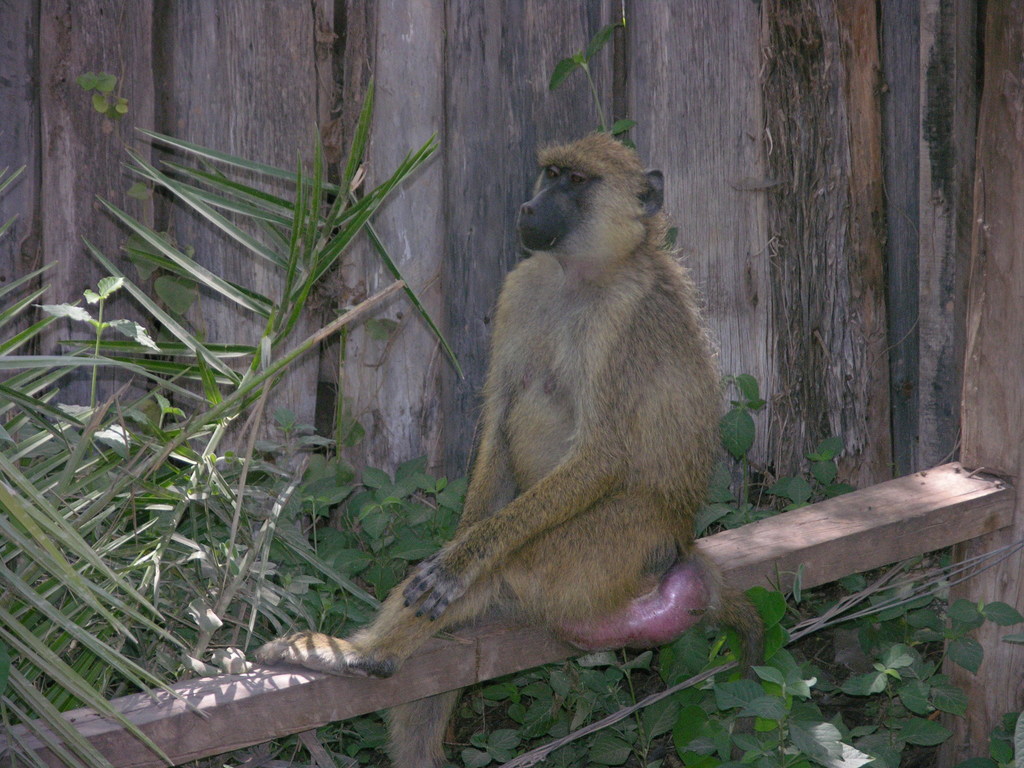
Yellow Baboon
Papio cynocephalus
Mammalstrong against birds, fungi
Common
Pack
While active with another mammal in play, it hits 7 harder (14 with two others).
41

32
Yellow Baboon
Papio cynocephalus
Mammalstrong against birds, fungi
Common
While active with another mammal in play, it hits 7 harder (14 with two others).
Papio cynocephalus
Photo: © anasacuta (original photo) · CC BY 4.0 (licence text) · cropped
Strong against: it deals 20% more damage to them. Weak against: these types deal 20% more damage to it.
The yellow baboon (Papio cynocephalus) is a baboon in the family of Old World monkeys. The species epithet means "dog-head" in Greek, due to the dog-like shape of the muzzle and head. Yellow baboons have slim bodies with long arms and legs along with yellowish-brown hair. They resemble the chacma baboon, but are somewhat smaller and with a less elongated muzzle. Their hairless faces are black, framed with white sideburns. Males can grow to about 84 cm (33 in), females to about 60 cm (24 in). They have long tails which grow to be nearly as long as their bodies. The average life span of the yellow baboon in the wild is roughly 15–20 years; some may live up to 30 years.
Yellow baboons inhabit savannas and light forests in eastern Africa, from Kenya and Tanzania to Zimbabwe and Botswana. They are diurnal, terrestrial, and live in complex, mixed-gender social groups of 8 to 200 individuals per troop. Like all other baboon species, they are omnivorous, with a preference for fruits; they also eat plants, leaves, seeds, grasses, bulbs, bark, blossoms and fungi, as well as worms, grubs, insects, spiders, scorpions, birds, rodents and small mammals. All species of baboons are highly opportunistic feeders and will eat virtually any food they can find.
Abridged excerpt from the Wikipedia article Yellow baboon, by its authors, under the CC BY-SA 4.0 licence.
Least Concern on the IUCN Red List: that’s what makes this card Common.
Every Common card has 100 points, shared between HP, ATK and DEF:
How they’re shared out:

 DEF 32