 …
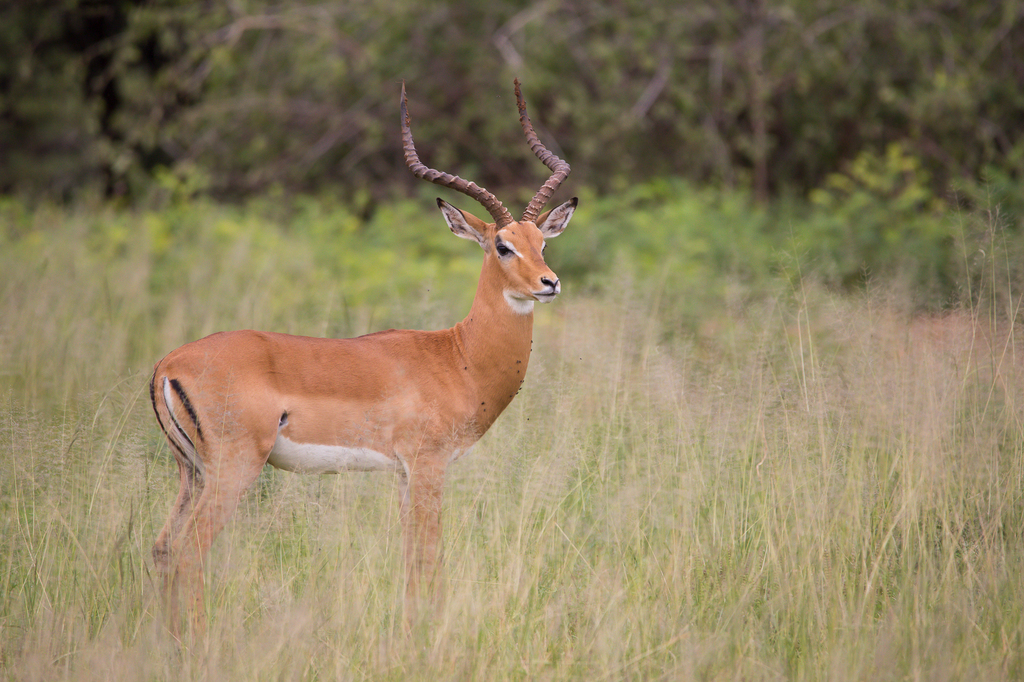
Impala
Aepyceros melampus
Mammalstrong against birds, fungi
Common
Pack
While active with another mammal in play, it hits 7 harder (14 with two others).
44

29
Impala
Aepyceros melampus
Mammalstrong against birds, fungi
Common
While active with another mammal in play, it hits 7 harder (14 with two others).
Aepyceros melampus
Photo: © Diogo Luiz (original photo) · CC BY 4.0 (licence text) · cropped
Strong against: it deals 20% more damage to them. Weak against: these types deal 20% more damage to it.
The impala or rooibok (Aepyceros melampus, lit. 'black-footed high-horn' in Ancient Greek) is a medium-sized antelope found in eastern and southern Africa. The only extant member of the genus Aepyceros, and tribe Aepycerotini, it was first described to Europeans by German zoologist Hinrich Lichtenstein in 1812. Two subspecies are recognised—the grassland-dwelling common impala (sometimes referred to as the Kenyan impala), and the larger and darker black-faced impala, which lives in slightly more arid, scrubland environments. The impala reaches 70–92 cm (28–36 in) at the shoulder and weighs 40–65 kg (88–143 lb). It features a glossy, reddish brown coat. The male's slender, lyre-shaped horns are 45–92 cm (18–36 in) long.
Abridged excerpt from the Wikipedia article Impala, by its authors, under the CC BY-SA 4.0 licence.
Least Concern on the IUCN Red List: that’s what makes this card Common.
Every Common card has 100 points, shared between HP, ATK and DEF:
How they’re shared out:

 DEF 29