
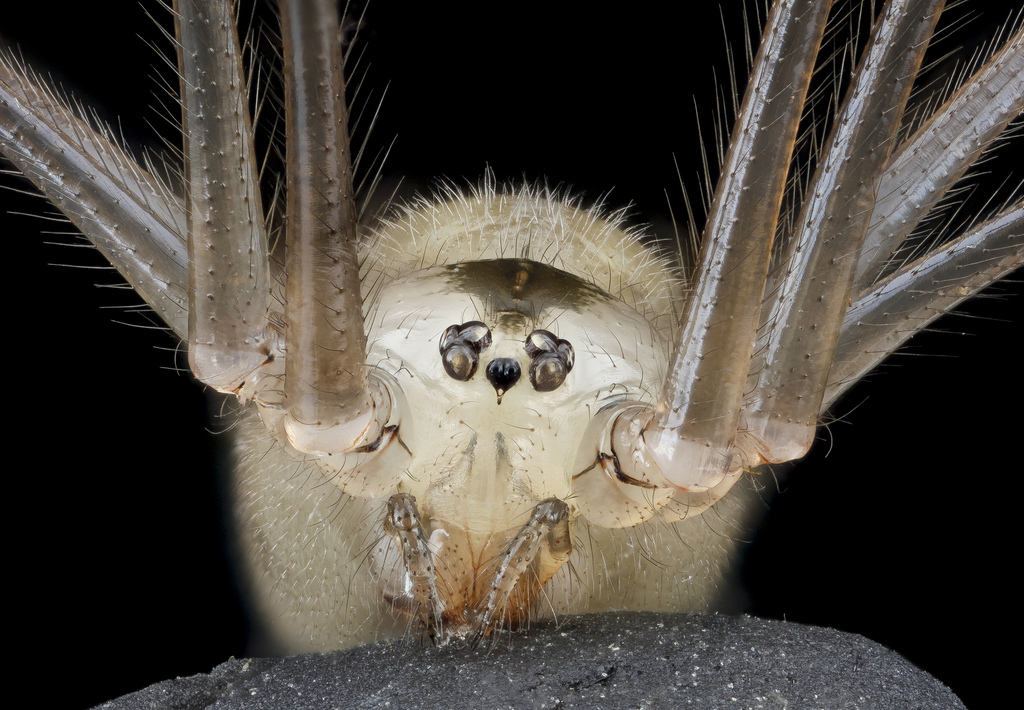
Long-bodied Cellar Spider
Pholcus phalangioides
Arachnidstrong against insects, birds
Common
While active with another arachnid in play, its target loses 4 HP at the start of each of its turns, as long as it stays active (7 with two others).

Long-bodied Cellar Spider
Pholcus phalangioides
Arachnidstrong against insects, birds
Common
While active with another arachnid in play, its target loses 4 HP at the start of each of its turns, as long as it stays active (7 with two others).
Pholcus phalangioides
Photo: iNaturalist (original photo) · CC0 (licence text) · cropped
Strong against: it deals 20% more damage to them. Weak against: these types deal 20% more damage to it.
Pholcus phalangioides, commonly known as the cosmopolitan cellar spider, long-bodied cellar spider, or one of various types called a daddy long-legs spider, is a spider of the family Pholcidae. It was first described in 1775 by the Swiss entomologist Johann Kaspar Füssli (his surname is also spelled Fuesslin) as Aranea phalangoides. Its common name of "daddy long-legs" should not be confused with a different arachnid group with the same common name, the harvestman (Opiliones), or the crane flies of the superfamily Tipuloidea.
Females have a body length of about 8 mm while males tend to be slightly smaller. The length of the spider's legs are on average 5 or 6 times the length of its body. Pholcus phalangioides has a habit of living on the ceilings of rooms, caves, garages or cellars.
This spider species is considered beneficial in parts of the world because it preys on other spiders, including species considered dangerous such as redback spiders. Pholcus phalangioides is known to be harmless to humans and a potential for the medicinal use of their silk has been reported.
Excerpt from the Wikipedia article Pholcus phalangioides, by its authors, under the CC BY-SA 4.0 licence.
No global status on the IUCN Red List: that’s what makes this card Common.
Every Common card has 100 points, shared between HP, ATK and DEF:
How they’re shared out:

