 …
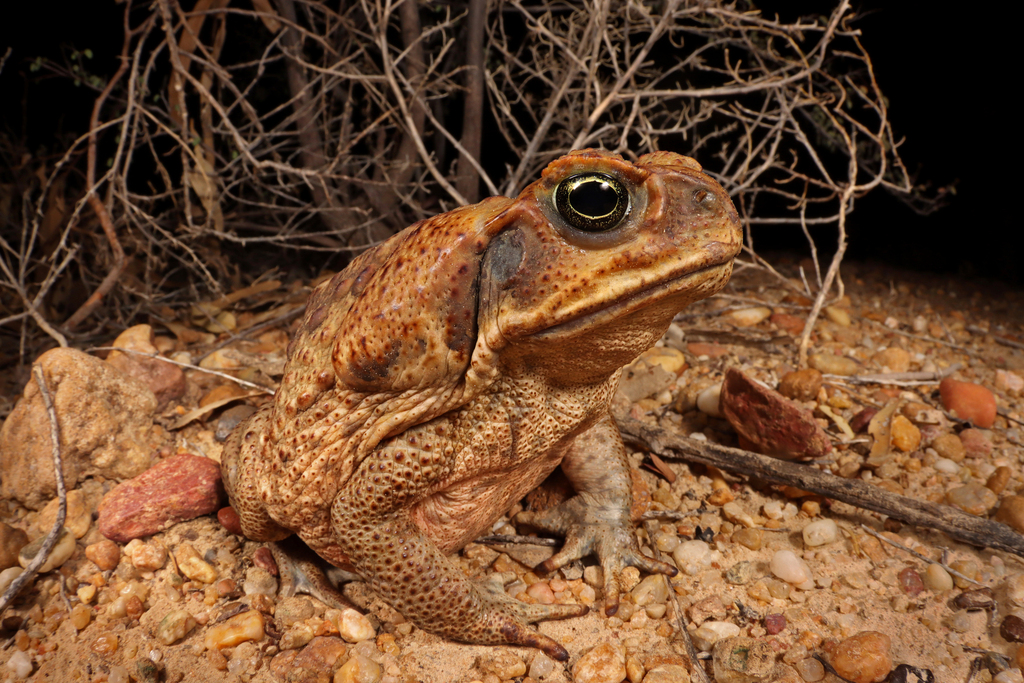
Cane Toad
Rhinella marina
Amphibianstrong against insects, arachnids
Common
Toxic skin
While active with another amphibian in play, any card that hits it loses 6 HP, without being knocked out (12 with two others).
34

35
Cane Toad
Rhinella marina
Amphibianstrong against insects, arachnids
Common
While active with another amphibian in play, any card that hits it loses 6 HP, without being knocked out (12 with two others).
Rhinella marina
Photo: © Connor Margetts (original photo) · CC BY 4.0 (licence text) · cropped
Strong against: it deals 20% more damage to them. Weak against: these types deal 20% more damage to it.
The cane toad (Rhinella marina), also known as the giant neotropical toad or marine toad, is a large, terrestrial true toad native to South and mainland Central America, but which has been introduced to various islands throughout Oceania and the Caribbean, as well as Northern Australia. It is included as a member of the genus Rhinella, which includes many true toad species found throughout Central and South America, but until 2007 it was assigned to the genus Bufo.
A fossil toad (specimen UCMP 41159) from the La Venta fauna of the late Miocene in Colombia is morphologically indistinguishable from modern cane toads from northern South America. It was discovered in a floodplain deposit, which suggests the R. marina habitat preferences have long been for open areas. The cane toad is a prolific breeder; females lay single-clump spawns with thousands of eggs. Its reproductive success is partly because of opportunistic feeding: it has a diet, unusual among anurans, of both dead and living matter. Adults average 10–15 cm (4–6 in) in length; the largest recorded specimen had a snout–vent length of 24 cm (9.4 in).
Abridged excerpt from the Wikipedia article Cane toad, by its authors, under the CC BY-SA 4.0 licence.
Least Concern on the IUCN Red List: that’s what makes this card Common.
Every Common card has 100 points, shared between HP, ATK and DEF:
How they’re shared out:

 DEF 35