 …
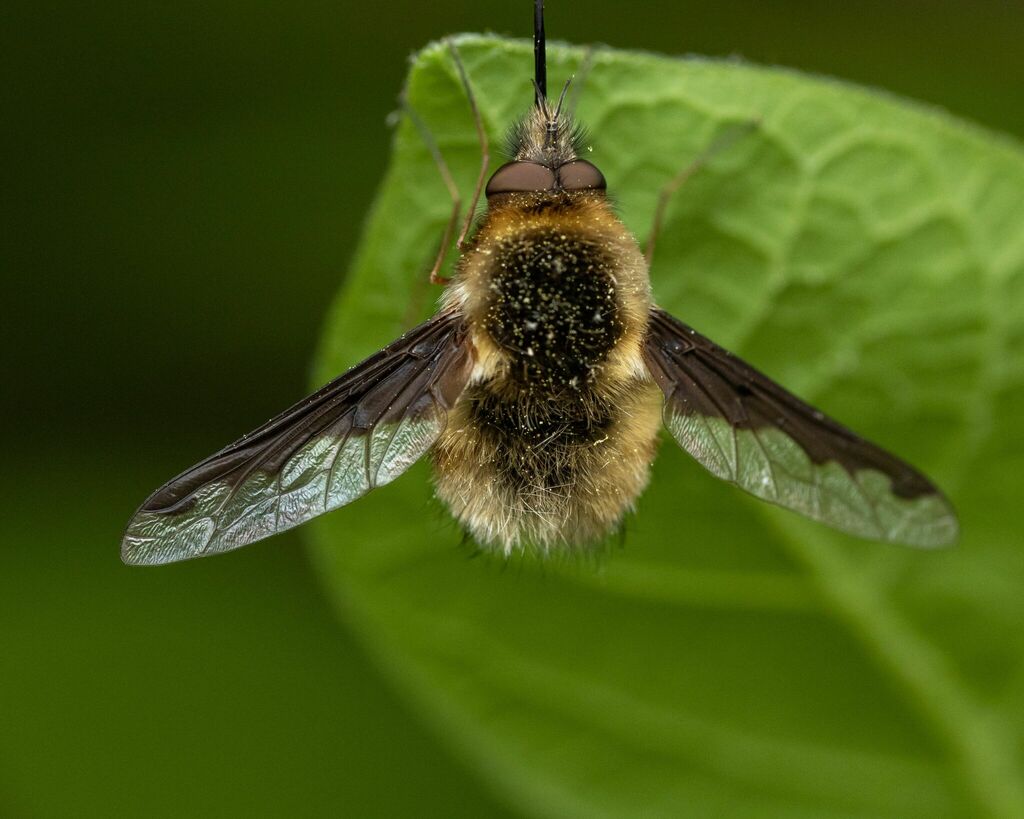
Greater Bee Fly
Bombylius major
Insectstrong against fungi, fish
Common
Swarm
While active with another insect in play, each of its attacks also hits the opposing bench for 10, without knocking them out (20 with two others).
32

37
Greater Bee Fly
Bombylius major
Insectstrong against fungi, fish
Common
While active with another insect in play, each of its attacks also hits the opposing bench for 10, without knocking them out (20 with two others).
Bombylius major
Photo: © Zachary Dankowicz (original photo) · CC BY 4.0 (licence text) · cropped
Strong against: it deals 20% more damage to them. Weak against: these types deal 20% more damage to it.
Bombylius major (commonly named the large bee-fly, the dark-edged bee-fly or the greater bee fly) is a parasitic bee mimic fly. B. major is the most common type of fly within the Bombylius genus. The fly derives its name from its close resemblance to bumblebees and is often mistaken for them.
Bombylius major exhibits a unique flight behavior known as "yawing" and plays a role in general pollination, without preference of flower types. The fly does not bite, sting, or spread disease. However, the fly uses this mimicry of bumblebees to its own advantage, allowing close access to host solitary bee and wasp nests in order to deposit its eggs. After hatching, the larvae find their way into the nests to parasitically feed on the grubs.
Excerpt from the Wikipedia article Bombylius major, by its authors, under the CC BY-SA 4.0 licence.
No global status on the IUCN Red List: that’s what makes this card Common.
Every Common card has 100 points, shared between HP, ATK and DEF:
How they’re shared out:

 DEF 37