 …
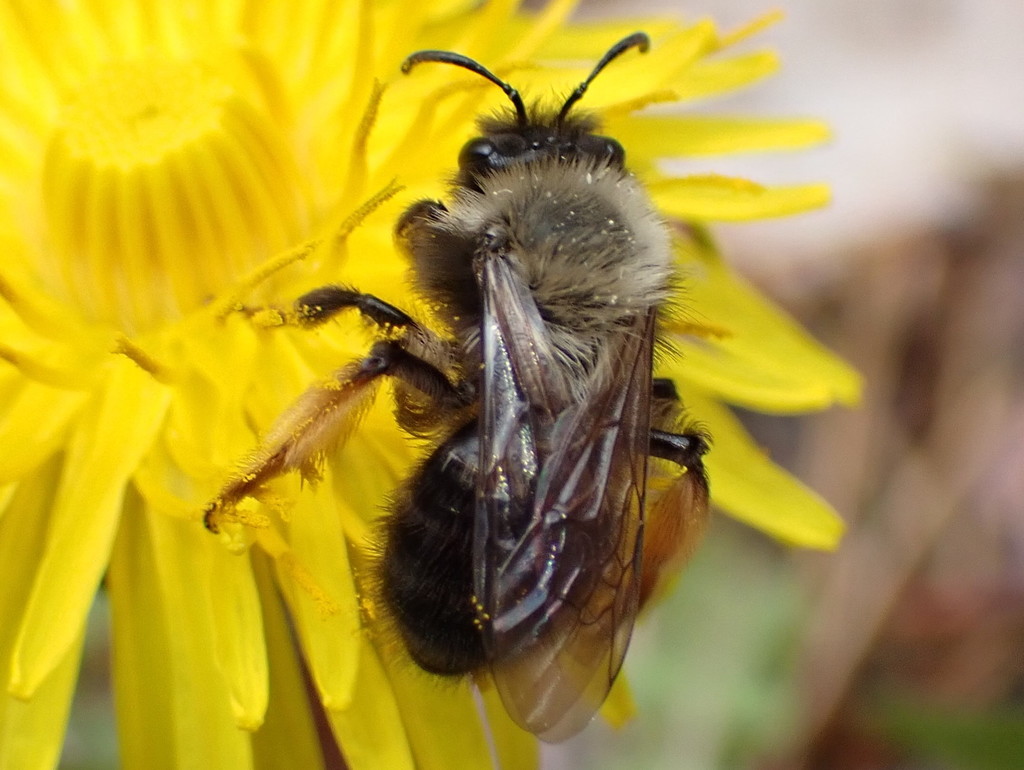
Clark's Mining Bee
Andrena clarkella
Insectstrong against fungi, fish
Common
Swarm
While active with another insect in play, each of its attacks also hits the opposing bench for 10, without knocking them out (20 with two others).
41

38
Clark's Mining Bee
Andrena clarkella
Insectstrong against fungi, fish
Common
While active with another insect in play, each of its attacks also hits the opposing bench for 10, without knocking them out (20 with two others).
Andrena clarkella
Photo: © Claire Moxon-Waltz (original photo) · CC BY 4.0 (licence text) · cropped
Strong against: it deals 20% more damage to them. Weak against: these types deal 20% more damage to it.
The Clark's miner bee (Andrena clarkella) is a species of miner bee in the family Andrenidae. Other common names include Clark's andrena and Clarke's mining bee. It is found in Europe and Northern Asia (excluding China) and North America.
Etymology: William Kirby named the species in honor of Bracy Clark, an English entomologist.
Identification: 10-13 mm. Male with brown hair with loose tergite bands. Rarely on flowers, more on tree bark basking. Female easy to determine in the field: very densely hairy, with black hairs on the abdomen and reddish brown hair on the mesonotum. Hind legs fox red with equally colored rail brush. Small specimens resemble Andrena bicolor. Terminal fringe dark brown.
Pollen sources: Oligolectic on willows (Salix, Salicaceae).
Nest building: Bare to sparsely overgrown areas in sparse forests Forest fringes or clearings, preferably in sandy soil, but also nests in humus soils, mostly in smaller aggregations with low nest density. The nest entrance is locked before each food supply flight. One to four brood cells are created per nest, often only 5 cm, a maximum of 30 cm below the surface.
Habitat: Affinity to forests; forest fringes, forest clearings, clear cuts, preferred on sandy soil. From the lowlands to the subalpine altitude.
Parasites: cuckoo bee is Nomada leucophthalma. As another nest parasite Bombylius major was observed. Adults are sometimes infested with Stylops melittae.
Flight period: In one generation from early March to mid-May.
Excerpt from the Wikipedia article Andrena clarkella, by its authors, under the CC BY-SA 4.0 licence.
No global status on the IUCN Red List: that’s what makes this card Common.
Every Common card has 100 points, shared between HP, ATK and DEF:
How they’re shared out:

 DEF 38