 …
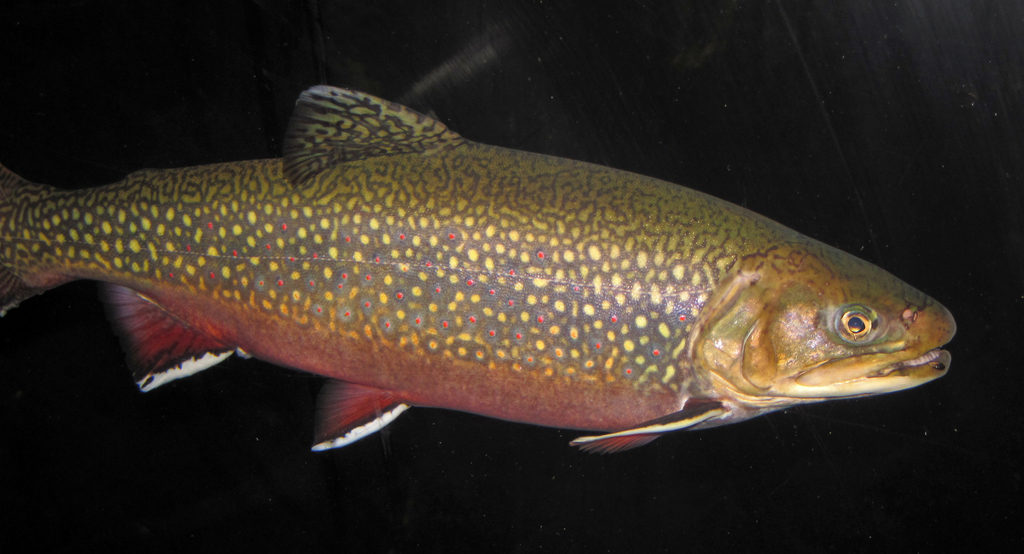
Brook Trout
Salvelinus fontinalis
Fishstrong against mammals, arachnids
Common
School
While active with another fish in play, a fish on your bench absorbs up to 9 of the damage this card takes, without being knocked out (18 with two others).
27

35
Brook Trout
Salvelinus fontinalis
Fishstrong against mammals, arachnids
Common
While active with another fish in play, a fish on your bench absorbs up to 9 of the damage this card takes, without being knocked out (18 with two others).
Salvelinus fontinalis
Photo: © James St. John (original photo) · CC BY 4.0 (licence text) · cropped
Strong against: it deals 20% more damage to them. Weak against: these types deal 20% more damage to it.
The brook trout (Salvelinus fontinalis) is a species of freshwater fish in the char genus Salvelinus of the salmon family Salmonidae native to Eastern North America in the United States and Canada. In parts of its range, it is also known as the eastern brook trout, speckled trout, brook char (or charr), squaretail, brookie, or mud trout, among others.
Two ecological forms of brook trout have been recognized by the US Forest Service. One ecological form is the long-lived potamodromous populations in Lake Superior known as coaster trout or coasters. The second ecological form is the short-living predaceous anadromous populations which are found in northern lakes and coastal rivers from Long Island to Hudson Bay, which are referred to as salters. Adult coaster brook trout are capable of reaching sizes over 2 feet in length and weigh up to 6.8 kg (15 lb), whereas adult salters average between 6 and 15 inches in length and weigh between 0.5 and 2.3 kg (1 and 5 lb). The brook trout is characterized by its distinctive olive-green body with yellow and blue-rimmed red spots, white and black edged orange fins, and dorsal vermiculation. The diet of the brook trout is restrictive to the season and location of the fish, but will typically consist of terrestrial and aquatic insects, fry, crustaceans, zooplankton, and worms.
Abridged excerpt from the Wikipedia article Brook trout, by its authors, under the CC BY-SA 4.0 licence.
Least Concern on the IUCN Red List: that’s what makes this card Common.
Every Common card has 100 points, shared between HP, ATK and DEF:
How they’re shared out:

 DEF 35