 …
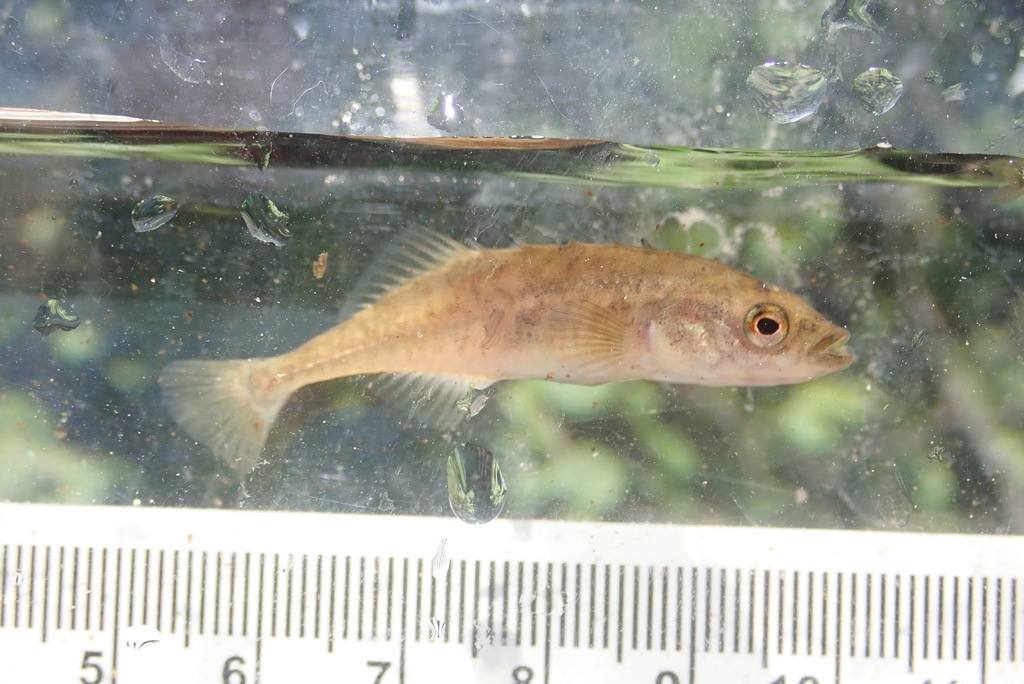
Brook Stickleback
Culaea inconstans
Fishstrong against mammals, arachnids
Common
School
While active with another fish in play, a fish on your bench absorbs up to 9 of the damage this card takes, without being knocked out (18 with two others).
30

42
Brook Stickleback
Culaea inconstans
Fishstrong against mammals, arachnids
Common
While active with another fish in play, a fish on your bench absorbs up to 9 of the damage this card takes, without being knocked out (18 with two others).
Culaea inconstans
Photo: © Rob Foster (original photo) · CC BY 4.0 (licence text) · cropped
Strong against: it deals 20% more damage to them. Weak against: these types deal 20% more damage to it.
The brook stickleback (Culaea inconstans) is a small freshwater fish that is distributed across the US and Canada. It grows to a length of about 2 inches. It occupies the northern part of the eastern United States, as well as the southern half of Canada. Small populations are scattered throughout the Mississippi-Great Lakes basin extending to Colorado, New Mexico, Kentucky, Tennessee, etc., though some of these areas are not native to the species. This small fish inhabits clear, cool streams and lakes. They eat small Invertebrates, algae, insect larvae, and occasionally their own eggs. They are also preyed upon by smallmouth bass and northern pike. Feeding time is usually dawn and sunset. The brook stickleback does have active competition mostly from minnows, but feeding times are different, along with diet. Spawning occurs in midsummer. Males secure a territory, build a nest, and mate with females. Males provide protection for the eggs, ward off predators, and usually die later in the season. The nests are built out of aquatic grasses. This is considered an annual species. Though the brook stickleback is not considered a threatened species, deforesting and changing waters are altering ecosystems of the species. Harvesting of trees around riparian environments is having a large effect of the stream ecosystem where the brook stickleback resides.
Excerpt from the Wikipedia article Brook stickleback, by its authors, under the CC BY-SA 4.0 licence.
Least Concern on the IUCN Red List: that’s what makes this card Common.
Every Common card has 100 points, shared between HP, ATK and DEF:
How they’re shared out:

 DEF 42