 …
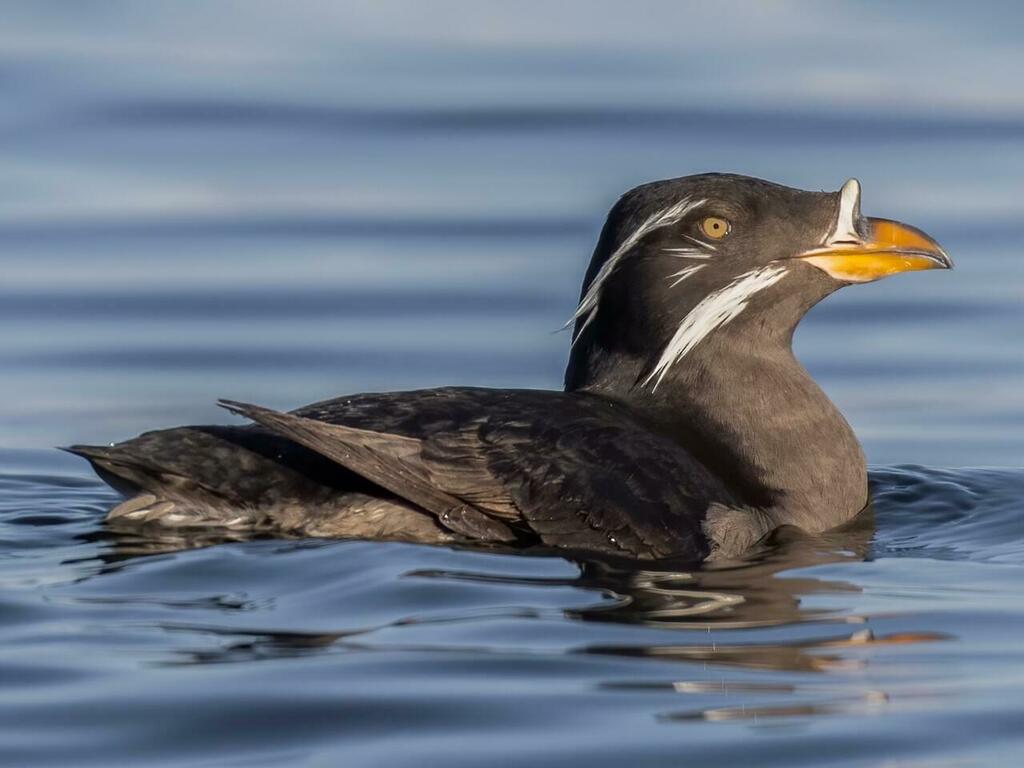
Rhinoceros Auklet
Cerorhinca monocerata
Birdstrong against fish, reptiles
Common
Swoop
While active with another bird in play, it hits 6 harder on its first attack after entering play (12 with two others).
28

32
Rhinoceros Auklet
Cerorhinca monocerata
Birdstrong against fish, reptiles
Common
While active with another bird in play, it hits 6 harder on its first attack after entering play (12 with two others).
Cerorhinca monocerata
Photo: Kyle Bowman (original photo) · CC0 (licence text) · cropped
Strong against: it deals 20% more damage to them. Weak against: these types deal 20% more damage to it.
The rhinoceros auklet (Cerorhinca monocerata) is a seabird and a close relative of the puffins. It is the only extant species of the genus Cerorhinca. Given its close relationship with the puffins, the common name rhinoceros puffin has been proposed for the species.
It ranges widely across the North Pacific, feeding on small fish and nesting in colonies. Its name is derived from a horn-like extension of the beak (the anatomic term for this extension is the rhamphotheca). This horn is only present in breeding adults, and like the elaborate sheath on the bill of puffins is shed every year. This horn also possesses fluorescent properties, which is likely involved in reproductive signalling.
The rhinoceros auklet (also known as the rhino auklet, horn-billed puffin, or unicorn puffin), is a medium-sized auk with a large, strong, orange/brown bill (with the 'horn' protruding from it). The plumage is dark on top and paler below; breeding adults (both male and female) possess white plumes above the eyes and behind the bill. Males are slightly larger than females (about 10% in mass).
Excerpt from the Wikipedia article Rhinoceros auklet, by its authors, under the CC BY-SA 4.0 licence.
Least Concern on the IUCN Red List: that’s what makes this card Common.
Every Common card has 100 points, shared between HP, ATK and DEF:
How they’re shared out:

 DEF 32