 …
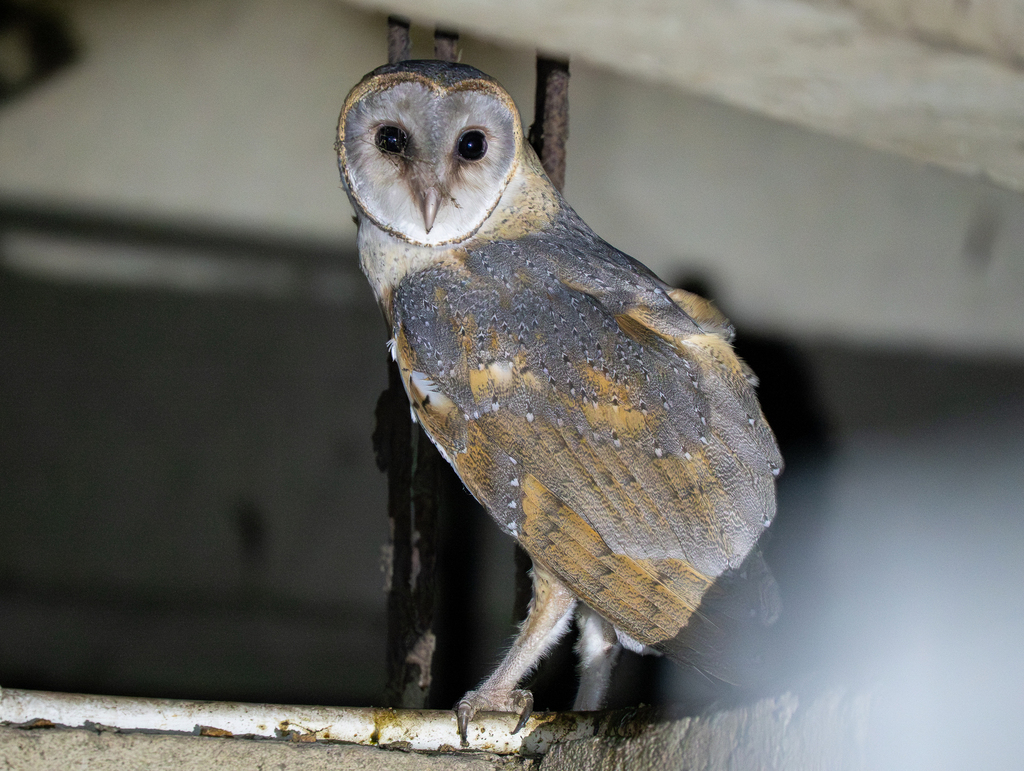
Eastern Barn Owl
Tyto javanica
Birdstrong against fish, reptiles
Common
Swoop
While active with another bird in play, it hits 6 harder on its first attack after entering play (12 with two others).
29

33
Eastern Barn Owl
Tyto javanica
Birdstrong against fish, reptiles
Common
While active with another bird in play, it hits 6 harder on its first attack after entering play (12 with two others).
Tyto javanica
Photo: © Forest Botial-Jarvis (original photo) · CC BY 4.0 (licence text) · cropped
Strong against: it deals 20% more damage to them. Weak against: these types deal 20% more damage to it.
The Eastern barn owl (Tyto javanica) is usually considered a subspecies group and together with the American barn owl group, the western barn owl group, and sometimes the Andaman masked owl make up the genus Tyto. The cosmopolitan barn owl is recognized by most taxonomic authorities. A few (including the International Ornithologists' Union) separate them into distinct species, as is done here. The eastern barn owl is native to southeastern Asia, New Zealand, and Australasia.
The eastern barn owl is nocturnal over most of its range, but in some Pacific islands, it also hunts by day. They specialise in hunting animals on the ground, and nearly all of their food consists of small mammals which they locate by sound, their hearing being very acute. They mate for life unless one of the pair is killed, after which a new pair bond may be formed. Breeding takes place at varying times of year according to locality, with a clutch, averaging about four eggs, being laid in a nest in a tree hollow, old building or fissure in a cliff. The female does all the incubation, and she and the young chicks are reliant on the male for food. When large numbers of small prey are readily available, barn owl populations can expand rapidly.
König proposed that Tyto alba delicatula should be split off as a separate species, to be known as the eastern barn owl, which would include the subspecies T. d. sumbaensis, T. d. meeki, T. d. crassirostris and T. d. interposita.
Excerpt from the Wikipedia article Eastern barn owl, by its authors, under the CC BY-SA 4.0 licence.
No global status on the IUCN Red List: that’s what makes this card Common.
Every Common card has 100 points, shared between HP, ATK and DEF:
How they’re shared out:

 DEF 33