 …
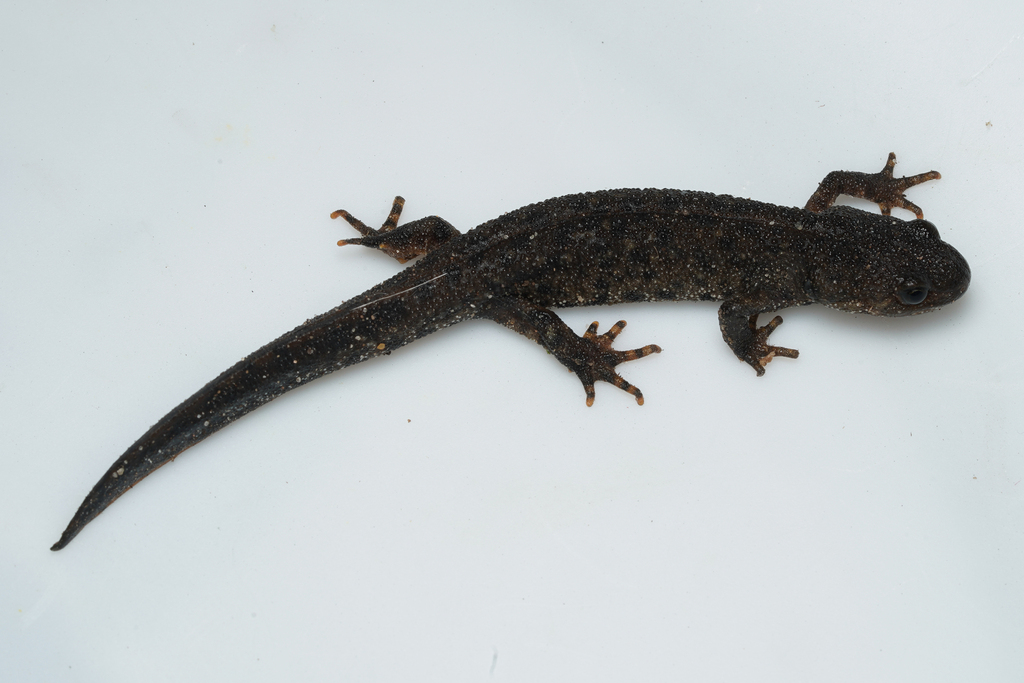
Great Crested Newt
Triturus cristatus
Amphibianstrong against insects, arachnids
Common
Toxic skin
While active with another amphibian in play, any card that hits it loses 6 HP, without being knocked out (12 with two others).
35

34
Great Crested Newt
Triturus cristatus
Amphibianstrong against insects, arachnids
Common
While active with another amphibian in play, any card that hits it loses 6 HP, without being knocked out (12 with two others).
Triturus cristatus
Photo: © Dr. Sven Gippner (original photo) · CC BY 4.0 (licence text) · cropped
Strong against: it deals 20% more damage to them. Weak against: these types deal 20% more damage to it.
The northern crested newt, great crested newt or warty newt (Triturus cristatus) is a newt species native to Great Britain, northern and central continental Europe and parts of Western Siberia. It is a large newt, with females growing up to 16 cm (6.3 in) long. Its back and sides are dark brown, while the belly is yellow to orange with dark blotches. During the breeding season, males develop a conspicuous jagged crest on their back and tail.
The northern crested newt spends most of the year on land, primarily in wooded areas of the lowlands. In spring, it moves to aquatic breeding sites, mainly larger fish-free ponds. Males court females with a ritualised display and deposit a spermatophore on the ground, which the female then picks up with her cloaca. After fertilisation, a female lays around 200 eggs, folding them into water plants. The larvae develop over two to four months before metamorphosing into terrestrial juveniles (efts). Both larvae and land-dwelling newts mainly feed on different invertebrates.
Several former subspecies of the northern crested newt are now recognised as separate species within the genus Triturus. Its closest relative is the Danube crested newt (T. dobrogicus). It sometimes forms hybrids with some of its relatives, including the marbled newt (T. marmoratus). Although it is currently the most widespread Triturus species, the northern crested newt was probably confined to small refugial areas in the Carpathians during the Last Glacial Maximum.
Abridged excerpt from the Wikipedia article Northern crested newt, by its authors, under the CC BY-SA 4.0 licence.
Least Concern on the IUCN Red List: that’s what makes this card Common.
Every Common card has 100 points, shared between HP, ATK and DEF:
How they’re shared out:

 DEF 34