 …
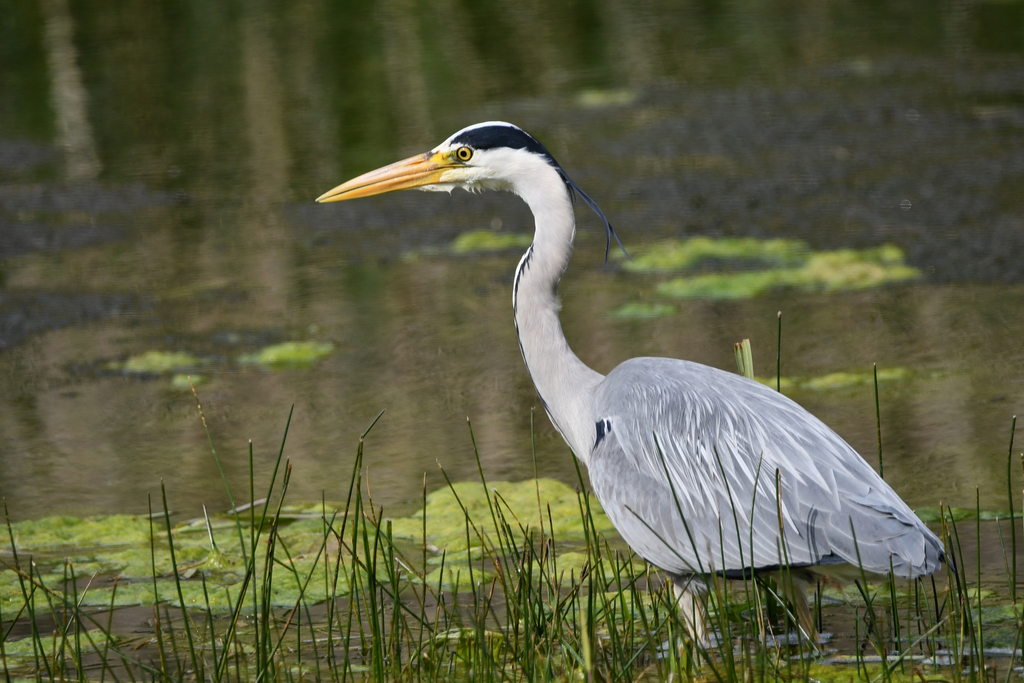
Grey Heron
Ardea cinerea
Birdstrong against fish, reptiles
Common
Swoop
While active with another bird in play, it hits 6 harder on its first attack after entering play (12 with two others).
31

31
Grey Heron
Ardea cinerea
Birdstrong against fish, reptiles
Common
While active with another bird in play, it hits 6 harder on its first attack after entering play (12 with two others).
Ardea cinerea
Photo: © Frank Sengpiel (original photo) · CC BY 4.0 (licence text) · cropped
Strong against: it deals 20% more damage to them. Weak against: these types deal 20% more damage to it.
The grey heron (Ardea cinerea) is a long-legged wading bird of the heron family, Ardeidae, native throughout Europe, Asia, and most of Africa. It is resident in much of its range, but some populations from the more northern parts migrate southwards in autumn. A bird of wetland areas, it can be seen around lakes, rivers, ponds, marshes and on the sea coast. It feeds mostly on aquatic creatures which it catches after standing stationary beside or in the water, or stalking its prey through the shallows.
Standing up to 1 metre (3 ft 3 in) tall, adults weigh from 1 to 2 kg (2 to 4 lb). They have a white head and neck with a broad black stripe that extends from the eye to the black crest. The body and wings are grey above and the underparts are greyish-white, with some black on the flanks. The long, sharply pointed beak is pinkish-yellow and the legs are brown.
The birds breed colonially in spring in heronries, usually building their nests high in trees. A clutch of usually three to five bluish-green eggs is laid. Both birds incubate the eggs for around 25 days, and then both feed the chicks, which fledge when 7–8 weeks old. Many juveniles do not survive their first winter, but if they do, they can expect to live for about 5 years.
Abridged excerpt from the Wikipedia article Grey heron, by its authors, under the CC BY-SA 4.0 licence.
Least Concern on the IUCN Red List: that’s what makes this card Common.
Every Common card has 100 points, shared between HP, ATK and DEF:
How they’re shared out:

 DEF 31