 …
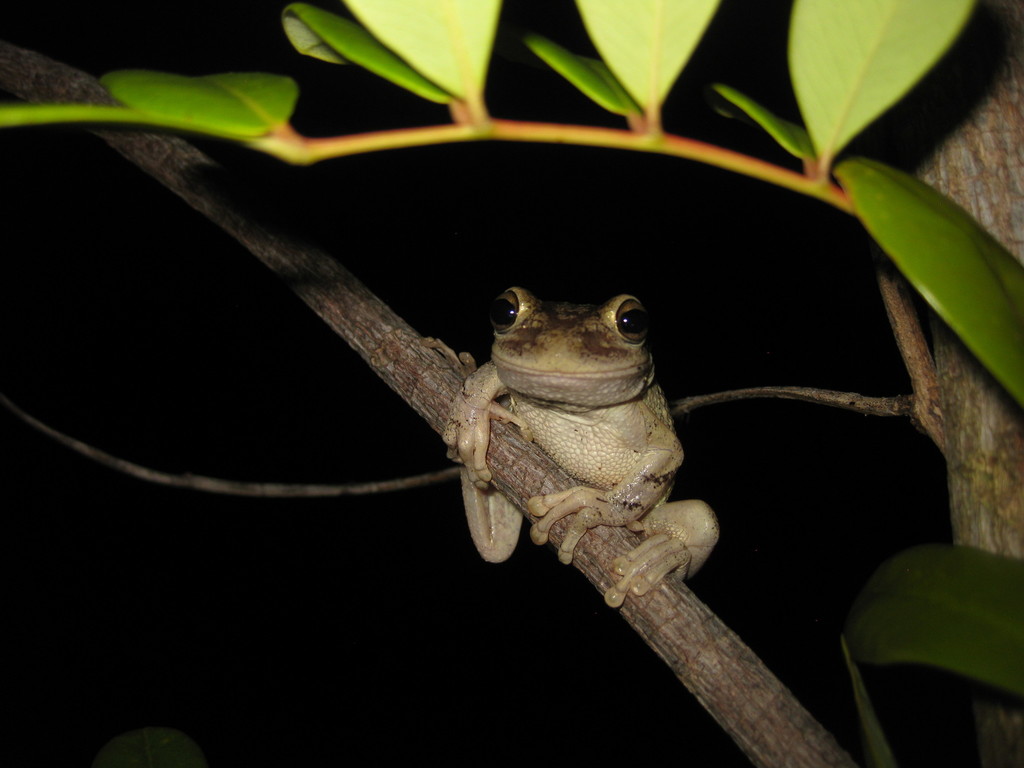
Cuban Tree Frog
Osteopilus septentrionalis
Amphibianstrong against insects, arachnids
Common
Toxic skin
While active with another amphibian in play, any card that hits it loses 6 HP, without being knocked out (12 with two others).
36

31
Cuban Tree Frog
Osteopilus septentrionalis
Amphibianstrong against insects, arachnids
Common
While active with another amphibian in play, any card that hits it loses 6 HP, without being knocked out (12 with two others).
Osteopilus septentrionalis
Photo: © Kevin Judge (original photo) · CC BY 4.0 (licence text) · cropped
Strong against: it deals 20% more damage to them. Weak against: these types deal 20% more damage to it.
The Cuban tree frog (Osteopilus septentrionalis) is a large species of tree frog that is native to Cuba, the Bahamas, and the Cayman Islands; but has become invasive in several other places around the Americas. Its wide diet and ability to thrive in urban areas has made it a highly invasive species with established colonies in places such as Florida, the Hawaiian island of Oahu, and the Caribbean Islands. These tree frogs can vary in size from 2 to 5.5 inches (5 to 12.7 cm) in length. Due to their large size, Cuban tree frogs can eat a wide variety of things, particularly native tree frogs, and their removal has shown to result in an increase in the amount of native tree frogs in an area. The tadpoles of Cuban tree frogs also heavily compete with native frog tadpoles, which can cause negative effects in body mass, size at metamorphosis, and growth rates for the native tadpoles.
Excerpt from the Wikipedia article Cuban tree frog, by its authors, under the CC BY-SA 4.0 licence.
Least Concern on the IUCN Red List: that’s what makes this card Common.
Every Common card has 100 points, shared between HP, ATK and DEF:
How they’re shared out:

 DEF 31