
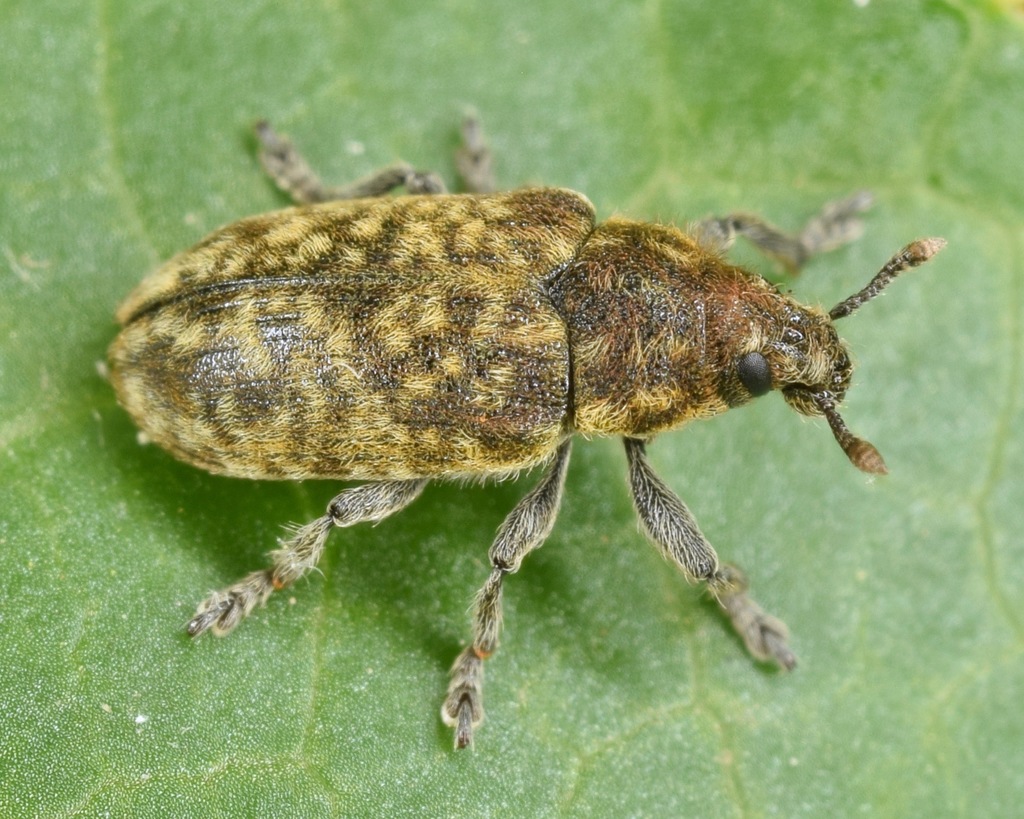
Nodding Thistle Receptacle Weevil
Rhinocyllus conicus
Insectstrong against fungi, fish
Common
While active with another insect in play, each of its attacks also hits the opposing bench for 10, without knocking them out (20 with two others).

Nodding Thistle Receptacle Weevil
Rhinocyllus conicus
Insectstrong against fungi, fish
Common
While active with another insect in play, each of its attacks also hits the opposing bench for 10, without knocking them out (20 with two others).
Rhinocyllus conicus
Photo: © skitterbug (original photo) · CC BY 4.0 (licence text) · cropped
Strong against: it deals 20% more damage to them. Weak against: these types deal 20% more damage to it.
Rhinocyllus conicus is a species of true weevil. It is best known as a controversial agent of biological pest control which has been used against noxious thistles in the genera Carduus, Cirsium, Onopordum, and Silybum.
The adult weevil is black and covered in a thin black and yellowish mottled coat of hairs. It is a short-snouted beetle up to 6 millimeters in total body length. The female lays over 100 eggs on or near the bracts of the thistle flower head. She covers the eggs with masticated plant tissue to protect them from predators. When the white larva emerges from its egg it burrows into the flower head and feeds on the flower parts and developing seeds. As it grows it deposits frass and chewed plant tissue on the walls of its chamber, producing a rigid protective shell in which it will pupate. Pupation takes up to two weeks and when the weevil emerges as an adult it remains inside the chamber for a few more weeks before tunneling out of the plant.
Abridged excerpt from the Wikipedia article Rhinocyllus conicus, by its authors, under the CC BY-SA 4.0 licence.
No global status on the IUCN Red List: that’s what makes this card Common.
Every Common card has 100 points, shared between HP, ATK and DEF:
How they’re shared out:

