 …
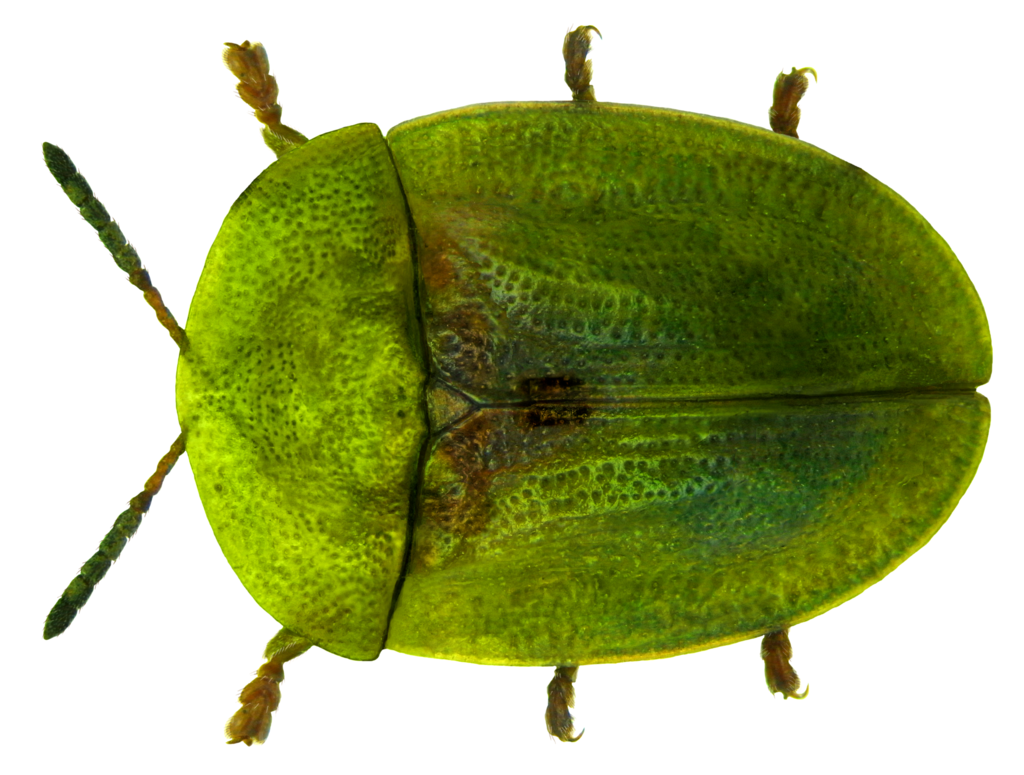
Thistle Tortoise Beetle
Cassida rubiginosa
Insectstrong against fungi, fish
Common
Swarm
While active with another insect in play, each of its attacks also hits the opposing bench for 10, without knocking them out (20 with two others).
42

37
Thistle Tortoise Beetle
Cassida rubiginosa
Insectstrong against fungi, fish
Common
While active with another insect in play, each of its attacks also hits the opposing bench for 10, without knocking them out (20 with two others).
Cassida rubiginosa
Photo: © Udo Schmidt (original photo) · CC BY-SA 4.0 (licence text) · cropped
Strong against: it deals 20% more damage to them. Weak against: these types deal 20% more damage to it.
The thistle tortoise beetle (Cassida rubiginosa) is a species of beetle in the subfamily Cassidinae (tortoise beetles) and the genus Cassida. The thistle tortoise beetle can be recognized by its green, rounded back and it can be found on thistle plants in many regions of North America and Europe. The thistle tortoise beetle was first discovered in 1902 in Lévis, Quebec. In 1931, Nellie F. Paterson was the first to document the mature larva. Later, the instar larva of this species was first recorded in 2004 by Jolanta Świętojańska. The thistle tortoise beetle exhibits multiple defense behaviors, such as a flexible shield, providing a barrier against the mandibles of predators, and an excretion that protects the eggs as well.
Its ability to massively consume and damage thistle plants has also made this beetle a well known biological control agent in many countries, including the United States, Canada, and Switzerland. However, in some cases, the impact of these beetles has been limited due to parasitism preventing their accumulation in regions of thistle targeted for biological control.
Excerpt from the Wikipedia article Thistle tortoise beetle, by its authors, under the CC BY-SA 4.0 licence.
No global status on the IUCN Red List: that’s what makes this card Common.
Every Common card has 100 points, shared between HP, ATK and DEF:
How they’re shared out:

 DEF 37