 …
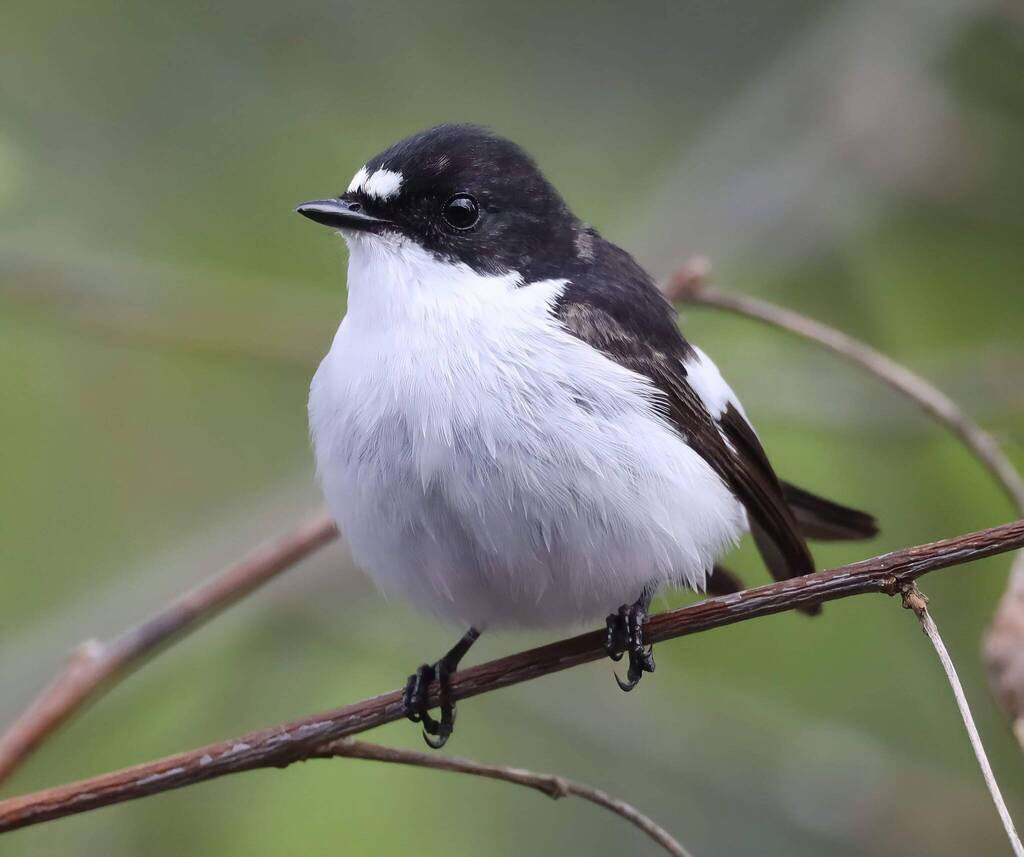
European Pied Flycatcher
Ficedula hypoleuca
Birdstrong against fish, reptiles
Common
Swoop
While active with another bird in play, it hits 6 harder on its first attack after entering play (12 with two others).
32

37
European Pied Flycatcher
Ficedula hypoleuca
Birdstrong against fish, reptiles
Common
While active with another bird in play, it hits 6 harder on its first attack after entering play (12 with two others).
Ficedula hypoleuca
Photo: © ViiruPesonen (original photo) · CC BY-SA 4.0 (licence text) · cropped
Strong against: it deals 20% more damage to them. Weak against: these types deal 20% more damage to it.
The European pied flycatcher (Ficedula hypoleuca) is a small passerine bird in the Old World flycatcher family. One of the four species of Western Palearctic black-and-white flycatchers, it hybridises to a limited extent with the collared flycatcher. It breeds in most of Europe and across the Western Palearctic. It is migratory, wintering mainly in tropical Africa. It usually builds its nests in holes on oak trees.
This species practices polygyny, usually bigamy, with the male travelling large distances to acquire a second mate. The male will mate with the secondary female and then return to the primary female in order to help with aspects of child rearing, such as feeding.
The European pied flycatcher is mainly insectivorous, although its diet also includes other arthropods. This species commonly feeds on caterpillars, flies, spiders, ants, bees and similar prey.
The European pied flycatcher has a very large range and population size and so it is of least concern according to the International Union for Conservation of Nature (IUCN).
Excerpt from the Wikipedia article European pied flycatcher, by its authors, under the CC BY-SA 4.0 licence.
Least Concern on the IUCN Red List: that’s what makes this card Common.
Every Common card has 100 points, shared between HP, ATK and DEF:
How they’re shared out:

 DEF 37