 …
Jumping Jack Ant
Myrmecia nigrocincta
Insectstrong against fungi, fish
Common
Swarm
While active with another insect in play, each of its attacks also hits the opposing bench for 10, without knocking them out (20 with two others).
31

39
Jumping Jack Ant
Myrmecia nigrocincta
Insectstrong against fungi, fish
Common
While active with another insect in play, each of its attacks also hits the opposing bench for 10, without knocking them out (20 with two others).
Myrmecia nigrocincta
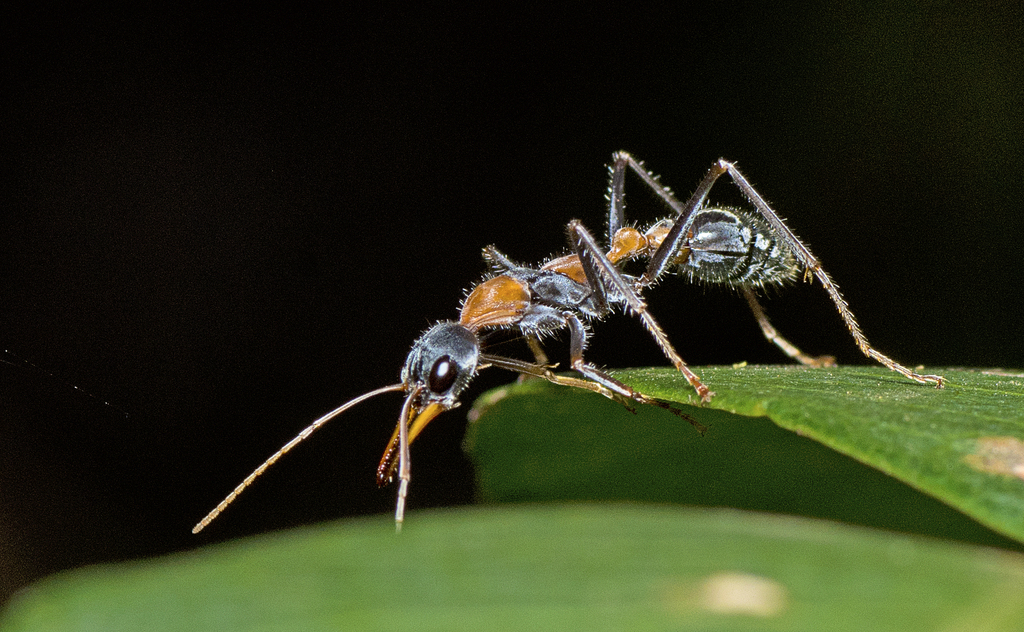
Photo: © Tony Eales (original photo) · CC BY-SA 4.0 (licence text) · cropped
Strong against: it deals 20% more damage to them. Weak against: these types deal 20% more damage to it.
Myrmecia nigrocincta, commonly known as the jumper ant or jumping jack, is an ant of the genus Myrmecia. The species was first described by Frederick Smith in 1858. Colonies of this ant are abundant in eastern Australia. Ants of this species are known for their ability to jump up to 10 centimetres, and they also have a powerful, venomous sting. Rather than foraging on the ground, M. nigrocincta prefer to forage in trees where they are known to pollinate certain flowers.
This ant is a large species, some workers can grow to over 15 mm (0.6 in) in length. They have a distinctive pattern of orange-red and black which distinguishes them from other Myrmecia species. M. nigrocincta possess the gamergates gene which allows workers to reproduce, either in the presence of a queen or in a colony where the queen is missing. Life expectancy of a worker ant is over one year. They are aggressive when attacking intruders.
Excerpt from the Wikipedia article Myrmecia nigrocincta, by its authors, under the CC BY-SA 4.0 licence.
No global status on the IUCN Red List: that’s what makes this card Common.
Every Common card has 100 points, shared between HP, ATK and DEF:
How they’re shared out:

 DEF 39