 …
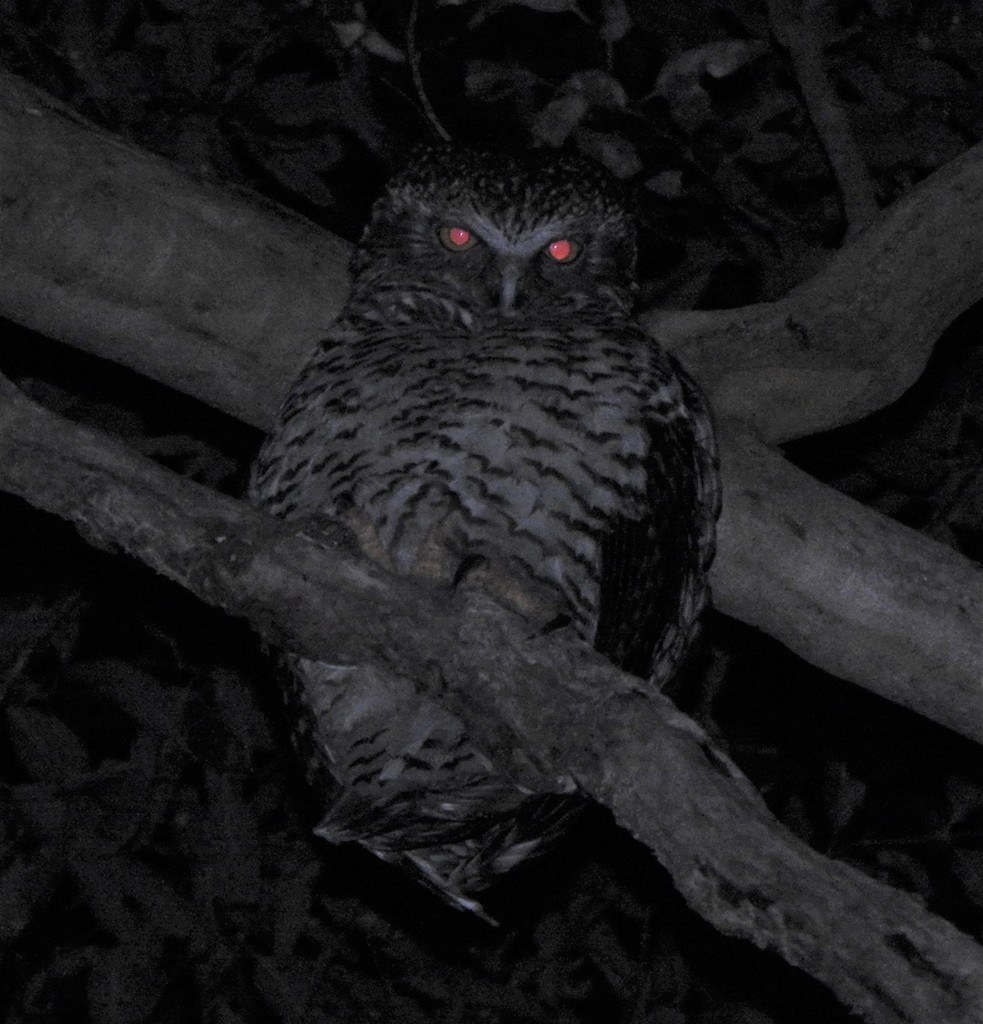
Powerful Owl
Ninox strenua
Birdstrong against fish, reptiles
Common
Swoop
While active with another bird in play, it hits 6 harder on its first attack after entering play (12 with two others).
29

31
Powerful Owl
Ninox strenua
Birdstrong against fish, reptiles
Common
While active with another bird in play, it hits 6 harder on its first attack after entering play (12 with two others).
Ninox strenua
Photo: © Greg Tasney (original photo) · CC BY-SA 4.0 (licence text) · cropped
Strong against: it deals 20% more damage to them. Weak against: these types deal 20% more damage to it.
The powerful owl (Ninox strenua), a species of owl native to south-eastern and eastern Australia, is the largest owl on the continent. It is found in coastal areas and in the Great Dividing Range, rarely more than 200 km (120 mi) inland. The IUCN Red List of Threatened Species also refers to this species as the powerful boobook.
An apex predator in its narrow distribution, powerful owls are often opportunists, like most predators, but generally are dedicated to hunting arboreal mammals, in particular small to medium-sized marsupials. Such prey can comprise about three-quarters of their diet. Generally, this species lives in primary forests with tall, native trees, but can show some habitat flexibility when not nesting.
The powerful owl is a typically territorial raptorial bird that maintains a large home range and has long intervals between egg-laying and hatching of clutches. Also, like many types of raptorial birds, they must survive a long stretch to independence in young owls after fledging. Unlike most raptorial birds, however, male powerful owls are larger and stronger than females, so the male takes the dominant position in the mating pair, which extends to food distribution.
Excerpt from the Wikipedia article Powerful owl, by its authors, under the CC BY-SA 4.0 licence.
Least Concern on the IUCN Red List: that’s what makes this card Common.
Every Common card has 100 points, shared between HP, ATK and DEF:
How they’re shared out:

 DEF 31