 …
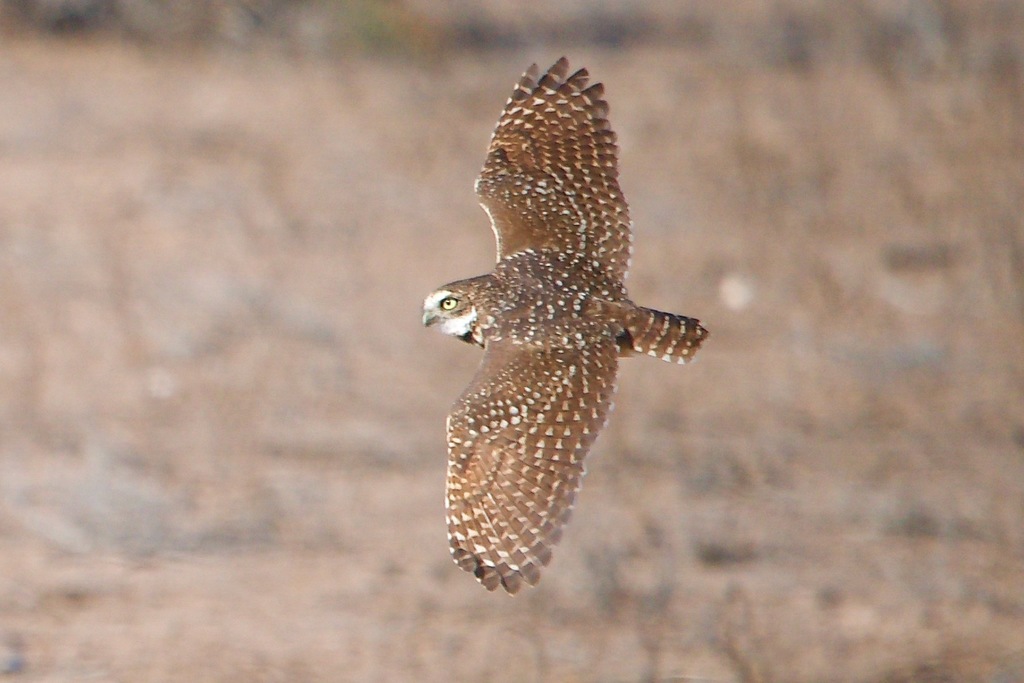
Burrowing Owl
Athene cunicularia
Birdstrong against fish, reptiles
Common
Swoop
While active with another bird in play, it hits 6 harder on its first attack after entering play (12 with two others).
31

33
Burrowing Owl
Athene cunicularia
Birdstrong against fish, reptiles
Common
While active with another bird in play, it hits 6 harder on its first attack after entering play (12 with two others).
Athene cunicularia
Photo: © Bill Levine (original photo) · CC BY 4.0 (licence text) · cropped
Strong against: it deals 20% more damage to them. Weak against: these types deal 20% more damage to it.
The burrowing owl (Athene cunicularia) is a small, long-legged, primarily terrestrial—though not flightless—species of owl native to the open landscapes of North and South America. They are typically found in grasslands, rangelands, agricultural areas, deserts, or any other open, dry area with low vegetation. They nest and roost in burrows, and, despite their common name, do not often construct these dwellings themselves, rather repurposing disused burrows or tunnels previously excavated and inhabited by other species, such as American badgers (Taxidea taxus), foxes (Vulpes sp.), ground squirrels or prairie dogs (Cynomys spp.), among others.
Unlike most owls, burrowing owls are often active during the day, although they tend to avoid the heat of midday. But, similar to many other species of owls, they are mostly crepuscular hunters, as they can utilize their night vision and attuned hearing to maximum potential during sunrise and sunset. Having evolved to live on open grasslands and prairie habitat (as well as badlands, chaparral and desert ecosystems), as opposed to dense forest, the burrowing owl has developed longer legs than other owls, a trait which enables it to sprint when pursuing its prey, not dissimilarly to the greater roadrunner, as well as providing momentum when taking flight; however, burrowing owls typically only become airborne for short bursts, such as when fleeing threats, and typically do not fly very high off of the ground.
Excerpt from the Wikipedia article Burrowing owl, by its authors, under the CC BY-SA 4.0 licence.
Least Concern on the IUCN Red List: that’s what makes this card Common.
Every Common card has 100 points, shared between HP, ATK and DEF:
How they’re shared out:

 DEF 33