 …
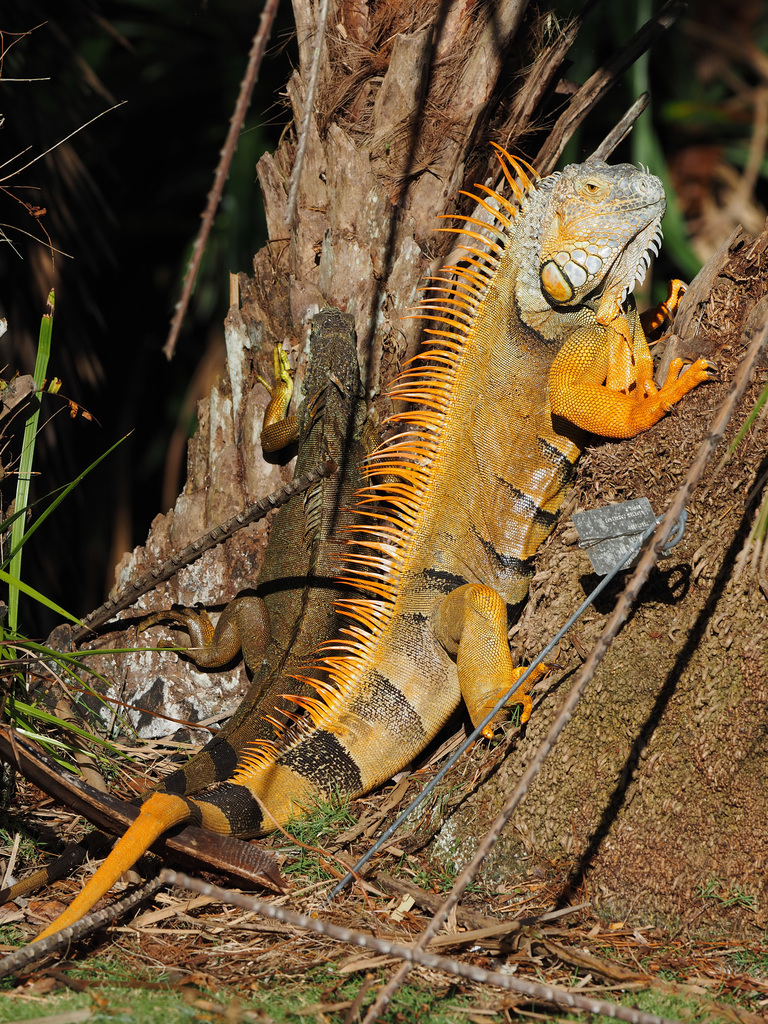
Green Iguana
Iguana iguana
Reptilestrong against amphibians, mammals
Common
Scales
While active with another reptile in play, it takes 3 less damage (6 with two others).
45

33
Green Iguana
Iguana iguana
Reptilestrong against amphibians, mammals
Common
While active with another reptile in play, it takes 3 less damage (6 with two others).
Iguana iguana
Photo: © Judy Gallagher (original photo) · CC BY-SA 4.0 (licence text) · cropped
Strong against: it deals 20% more damage to them. Weak against: these types deal 20% more damage to it.
The green iguana (Iguana iguana), also known as the American iguana or the common green iguana, is a large, arboreal, mostly herbivorous species of lizard of the genus Iguana. Usually, this animal is simply called the iguana. The green iguana ranges over a large geographic area; it is native from southern Brazil and Paraguay as far north as Mexico. It is highly invasive in many subtropical and tropical environments throughout the world.
A herbivore, it has adapted significantly with regard to locomotion and osmoregulation as a result of its diet. It grows to 1.7 m (5.6 ft) in length from head to tail, although a few specimens have grown more than 2 m (6.6 ft) with bodyweights upward of 9 kg (20 lb).
Although this species is commonly kept as a pet because of its disposition and coloration, it can be challenging to care for properly. Its requirements for adequate space, lighting, and heat can be difficult for hobbyists to meet.
Excerpt from the Wikipedia article Green iguana, by its authors, under the CC BY-SA 4.0 licence.
Least Concern on the IUCN Red List: that’s what makes this card Common.
Every Common card has 100 points, shared between HP, ATK and DEF:
How they’re shared out:

 DEF 33