 …
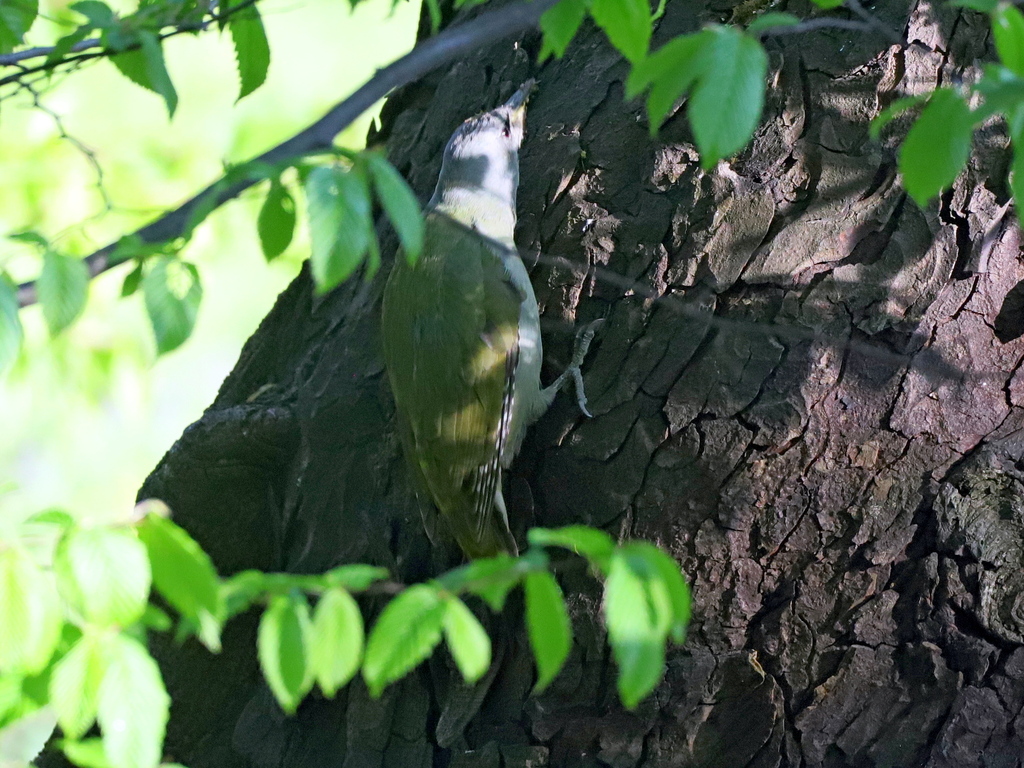
Grey-headed Woodpecker
Picus canus
Birdstrong against fish, reptiles
Common
Swoop
While active with another bird in play, it hits 6 harder on its first attack after entering play (12 with two others).
31

37
Grey-headed Woodpecker
Picus canus
Birdstrong against fish, reptiles
Common
While active with another bird in play, it hits 6 harder on its first attack after entering play (12 with two others).
Picus canus
Photo: © Andrew Simon (original photo) · CC BY 4.0 (licence text) · cropped
Strong against: it deals 20% more damage to them. Weak against: these types deal 20% more damage to it.
The grey-headed woodpecker (Picus canus), also known as the grey-faced woodpecker, is a Eurasian member of the woodpecker family, Picidae. Along with the more commonly found European green woodpecker and the Iberian green woodpecker, it is one of three closely related species found in Europe. Its distribution also stretches across large parts of the central and Eastern Palaearctic, all the way to the Pacific Ocean and south to the Himalaya and the Malay Peninsula.
The grey-headed woodpecker is more demanding than the European green woodpecker in terms of its habitat. It prefers deciduous forest with a high proportion of dead trees, feeding primarily on ants, although not being as exclusively dependent on this group as the green woodpecker. The grey-headed woodpecker's nest is typically excavated into dead or severely damaged trees.
In the majority of areas for which population numbers are available, the grey-headed woodpecker is in decline. IUCN's Least Concern rating is primarily based on the large distribution of the species.
Excerpt from the Wikipedia article Grey-headed woodpecker, by its authors, under the CC BY-SA 4.0 licence.
Least Concern on the IUCN Red List: that’s what makes this card Common.
Every Common card has 100 points, shared between HP, ATK and DEF:
How they’re shared out:

 DEF 37