 …
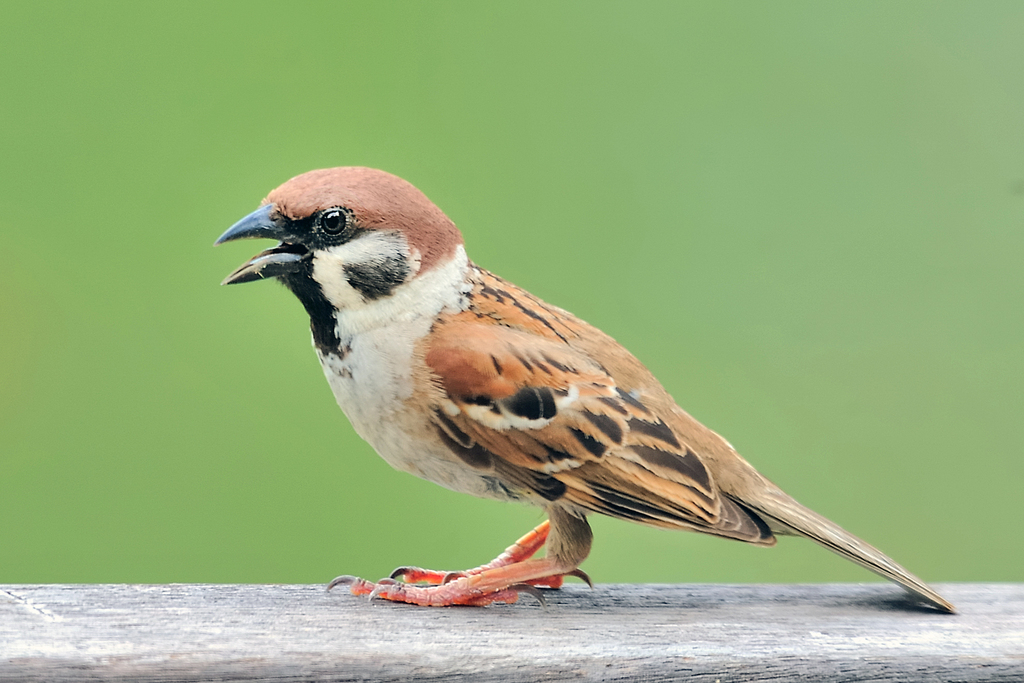
Eurasian Tree Sparrow
Passer montanus
Birdstrong against fish, reptiles
Common
Swoop
While active with another bird in play, it hits 6 harder on its first attack after entering play (12 with two others).
33

38
Eurasian Tree Sparrow
Passer montanus
Birdstrong against fish, reptiles
Common
While active with another bird in play, it hits 6 harder on its first attack after entering play (12 with two others).
Passer montanus
Photo: © Yiwenyiwen (original photo) · CC BY-SA 4.0 (licence text) · cropped
Strong against: it deals 20% more damage to them. Weak against: these types deal 20% more damage to it.
The tree sparrow (Passer montanus Latin pronunciation: [pas.ser mon.ta.nus]) is a passerine bird in the sparrow family with a rich chestnut crown and nape and a black patch on each pure white cheek. The sexes have similar plumage, and young birds are duller versions of the adult. This sparrow breeds across much of temperate Eurasia and Southeast Asia and has been introduced elsewhere, including the United States, where it is known as the Eurasian tree sparrow or German sparrow to differentiate it from the native American tree sparrow. Although several subspecies are recognised, the appearance of this bird varies little across its extensive range.
The untidy nest of the tree sparrow is built in a natural cavity, a hole in a building, or the disused nest of a European magpie or white stork. The typical clutch is five or six eggs, which hatch in under two weeks. This sparrow mainly feeds on seeds, but also consumes invertebrates, particularly during the breeding season. As with other small birds, infection by parasites and diseases, as well as predation by birds of prey, take their toll, and the typical lifespan is about two years.
Abridged excerpt from the Wikipedia article Eurasian tree sparrow, by its authors, under the CC BY-SA 4.0 licence.
Least Concern on the IUCN Red List: that’s what makes this card Common.
Every Common card has 100 points, shared between HP, ATK and DEF:
How they’re shared out:

 DEF 38