 …
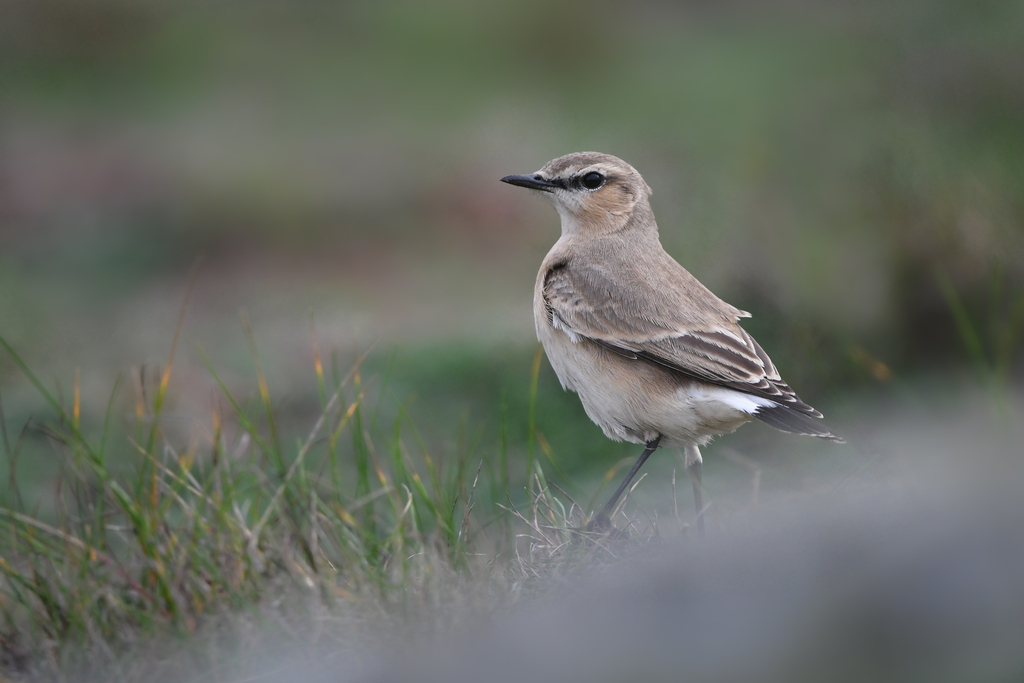
Isabelline Wheatear
Oenanthe isabellina
Birdstrong against fish, reptiles
Common
Swoop
While active with another bird in play, it hits 6 harder on its first attack after entering play (12 with two others).
31

36
Isabelline Wheatear
Oenanthe isabellina
Birdstrong against fish, reptiles
Common
While active with another bird in play, it hits 6 harder on its first attack after entering play (12 with two others).
Oenanthe isabellina
Photo: © Julien Renoult (original photo) · CC BY 4.0 (licence text) · cropped
Strong against: it deals 20% more damage to them. Weak against: these types deal 20% more damage to it.
The isabelline wheatear (Oenanthe isabellina) is a small passerine bird that was formerly classed as a member of the thrush family Turdidae, but is now more generally considered to be an Old World flycatcher in the family Muscicapidae. It is a migratory insectivorous bird. Its habitat is steppe and open countryside and it breeds in southern Russia and Central Asia to northern Pakistan, wintering in Africa and northwestern India. It is a very rare vagrant to western Europe.
In colouring it resembles a female northern wheatear but it is larger at 15–16.5 centimetres (5.9–6.5 in) in length, more upright and more tawny in colour, and has more black on its tail. The term isabelline refers to the parchment-like colouration. The axillaries and underwing coverts are white, whereas in the commoner bird they are mottled with grey. The sexes are similar.
Excerpt from the Wikipedia article Isabelline wheatear, by its authors, under the CC BY-SA 4.0 licence.
Least Concern on the IUCN Red List: that’s what makes this card Common.
Every Common card has 100 points, shared between HP, ATK and DEF:
How they’re shared out:

 DEF 36