 …
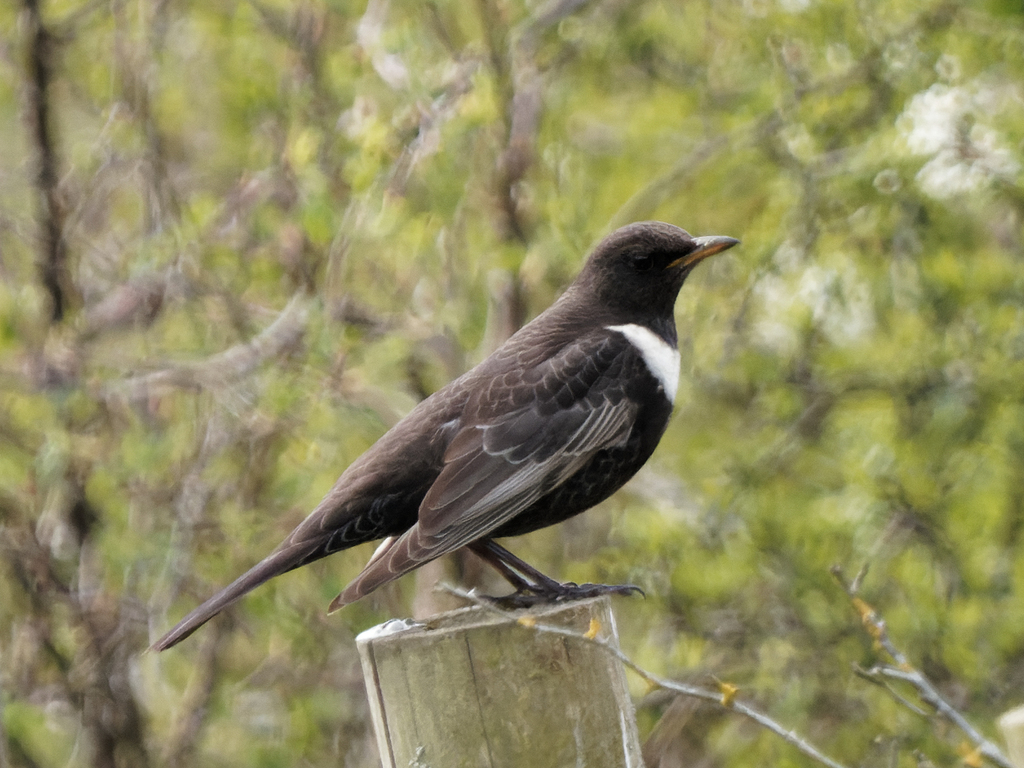
Ring Ouzel
Turdus torquatus
Birdstrong against fish, reptiles
Common
Swoop
While active with another bird in play, it hits 6 harder on its first attack after entering play (12 with two others).
30

35
Ring Ouzel
Turdus torquatus
Birdstrong against fish, reptiles
Common
While active with another bird in play, it hits 6 harder on its first attack after entering play (12 with two others).
Turdus torquatus
Photo: © William Stephens (original photo) · CC BY 4.0 (licence text) · cropped
Strong against: it deals 20% more damage to them. Weak against: these types deal 20% more damage to it.
The ring ouzel (Turdus torquatus) is a mainly European member of the thrush family Turdidae. It is a medium-sized thrush, 23–24 centimetres (9.1–9.4 in) in length and weighing 90–138 grams (3.2–4.9 oz). The male is predominantly black with a conspicuous white crescent across its breast. Females are browner and duller than males, and young birds may lack the pale chest markings altogether. In all but the northernmost part of its range, this is a high-altitude species, with three subspecies breeding in mountains from Ireland east to Iran. It breeds in open mountain areas with some trees or shrubs, the latter often including juniper and other treeline conifers, rowan, bilberry, heather, and hairy alpenrose. It is a migratory bird, leaving the breeding areas to winter in southern Europe, North Africa and Turkey, typically in mountains with junipers. The typical clutch is 3–6 brown-flecked pale blue or greenish-blue eggs. They are incubated almost entirely by the female, with hatching normally occurring after 13 days. The altricial, downy chicks fledge in another 14 days and are dependent on their parents for about 12 days after fledging.
Abridged excerpt from the Wikipedia article Ring ouzel, by its authors, under the CC BY-SA 4.0 licence.
Least Concern on the IUCN Red List: that’s what makes this card Common.
Every Common card has 100 points, shared between HP, ATK and DEF:
How they’re shared out:

 DEF 35