 …
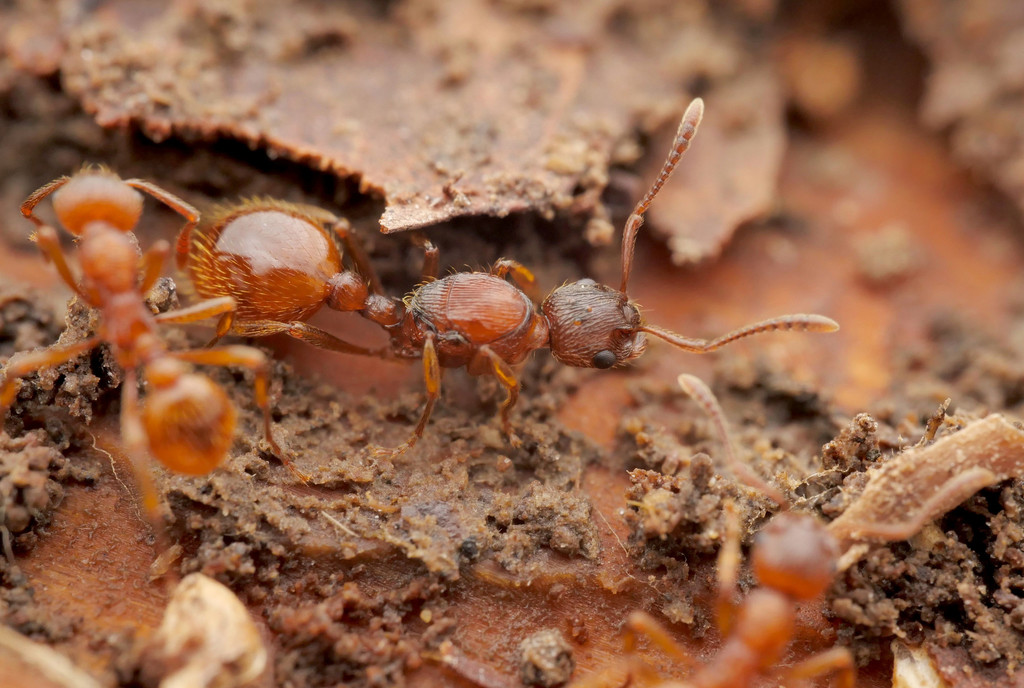
European fire ant
Myrmica rubra
Insectstrong against fungi, fish
Common
Swarm
While active with another insect in play, each of its attacks also hits the opposing bench for 10, without knocking them out (20 with two others).
31

39
European fire ant
Myrmica rubra
Insectstrong against fungi, fish
Common
While active with another insect in play, each of its attacks also hits the opposing bench for 10, without knocking them out (20 with two others).
Myrmica rubra
Photo: Philipp Hoenle (original photo) · CC0 (licence text) · cropped
Strong against: it deals 20% more damage to them. Weak against: these types deal 20% more damage to it.
Myrmica rubra, also known in the UK as the common red ant or in the USA as the European fire ant, is a species of ant of the genus Myrmica. It is found across Europe and is now invasive in some parts of North America and Asia. It is mainly red in colour, with slightly darker pigmentation on the head. These ants live under stones and fallen trees, and in soil. They are aggressive, often attacking rather than running away, and are equipped with a stinger, though they lack the ability to spray formic acid like the genus Formica.
This species is very similar to M. ruginodis, M. rubra is common in Southern England and becomes rarer further north whereas M. ruginodis is common all over the UK including Northern Scotland.
The larvae of the butterflies Phengaris alcon (Alcon blue) and P. teleius (scarce large blue) use M. rubra as their primary host.
Research from the University of Maine suggests that a certain type of nematode might be a catalyst for colony collapse, which suggests a possible management method for Myrmica rubra.
Excerpt from the Wikipedia article Myrmica rubra, by its authors, under the CC BY-SA 4.0 licence.
No global status on the IUCN Red List: that’s what makes this card Common.
Every Common card has 100 points, shared between HP, ATK and DEF:
How they’re shared out:

 DEF 39