 …
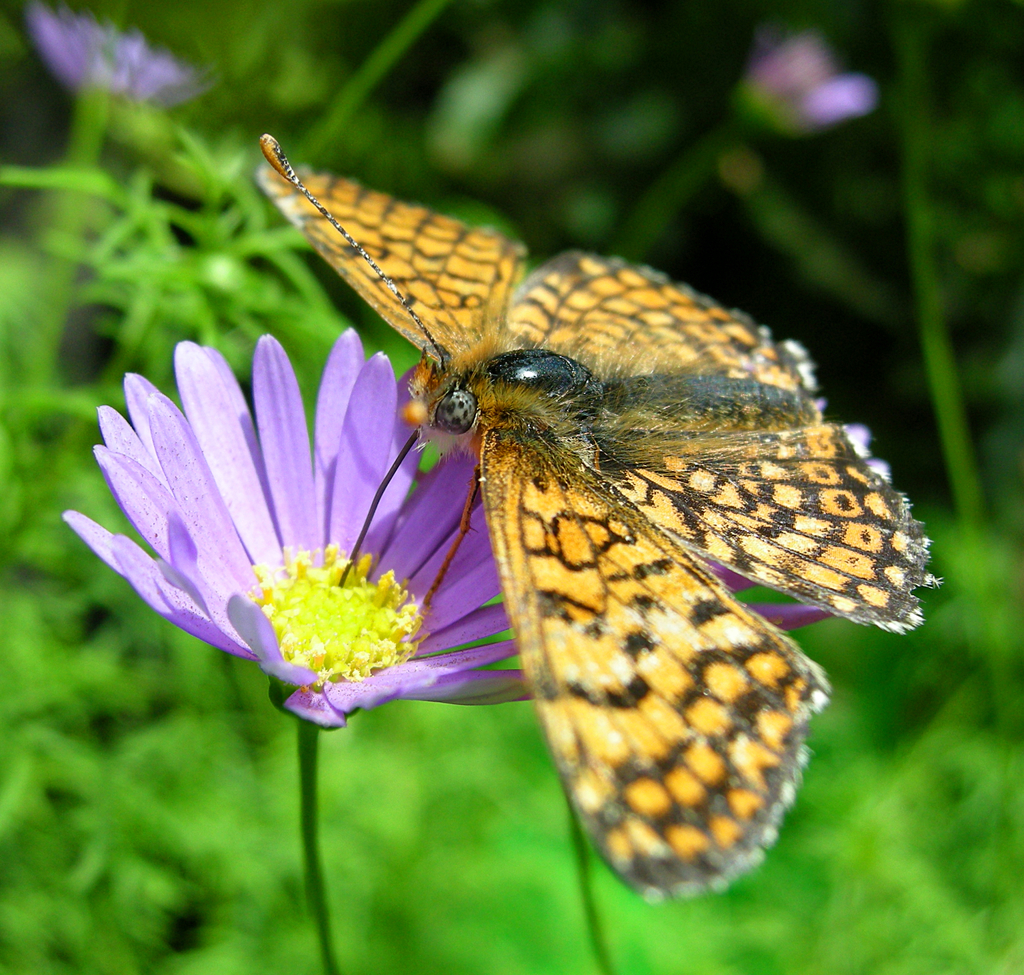
Glanville Fritillary
Melitaea cinxia
Insectstrong against fungi, fish
Common
Swarm
While active with another insect in play, each of its attacks also hits the opposing bench for 10, without knocking them out (20 with two others).
41

36
Glanville Fritillary
Melitaea cinxia
Insectstrong against fungi, fish
Common
While active with another insect in play, each of its attacks also hits the opposing bench for 10, without knocking them out (20 with two others).
Melitaea cinxia
Photo: © Thomas Bresson (original photo) · CC BY 4.0 (licence text) · cropped
Strong against: it deals 20% more damage to them. Weak against: these types deal 20% more damage to it.
The Glanville fritillary (Melitaea cinxia) is a butterfly of the family Nymphalidae. It is named for Eleanor Glanville, the naturalist who discovered it, and the checkerboard pattern on its wings. These butterflies live in almost all of Europe, especially Finland, and in parts of northwest Africa. They are absent from the far north of Europe and parts of the Iberian Peninsula. To the east they are found across the Palearctic (in Turkey, Russia, northern Kazakhstan, and Mongolia).
It has been discovered that this butterfly only mates one time in June or July and lays its eggs. It does not provide any protection to these eggs or care for the offspring. As adults, the Glanville fritillaries are short-lived; they spend most of their lives as caterpillars. As caterpillars, Glanville fritillaries enter a stage of diapause, which is a period of suspended development, during the winter time.
The spiked speedwell and ribwort plantain are the Glanville fritillary's preferred plants to lay eggs and to eat as larvae. Female butterflies will show a preference for one plant species over the other when deciding where to lay their eggs, but the caterpillars have no preference once they hatch. After entering the adult phase the fritillaries feed on nectar of the spiked speedwell and ribwort plantain, among others.
Abridged excerpt from the Wikipedia article Glanville fritillary, by its authors, under the CC BY-SA 4.0 licence.
No global status on the IUCN Red List: that’s what makes this card Common.
Every Common card has 100 points, shared between HP, ATK and DEF:
How they’re shared out:

 DEF 36