 …
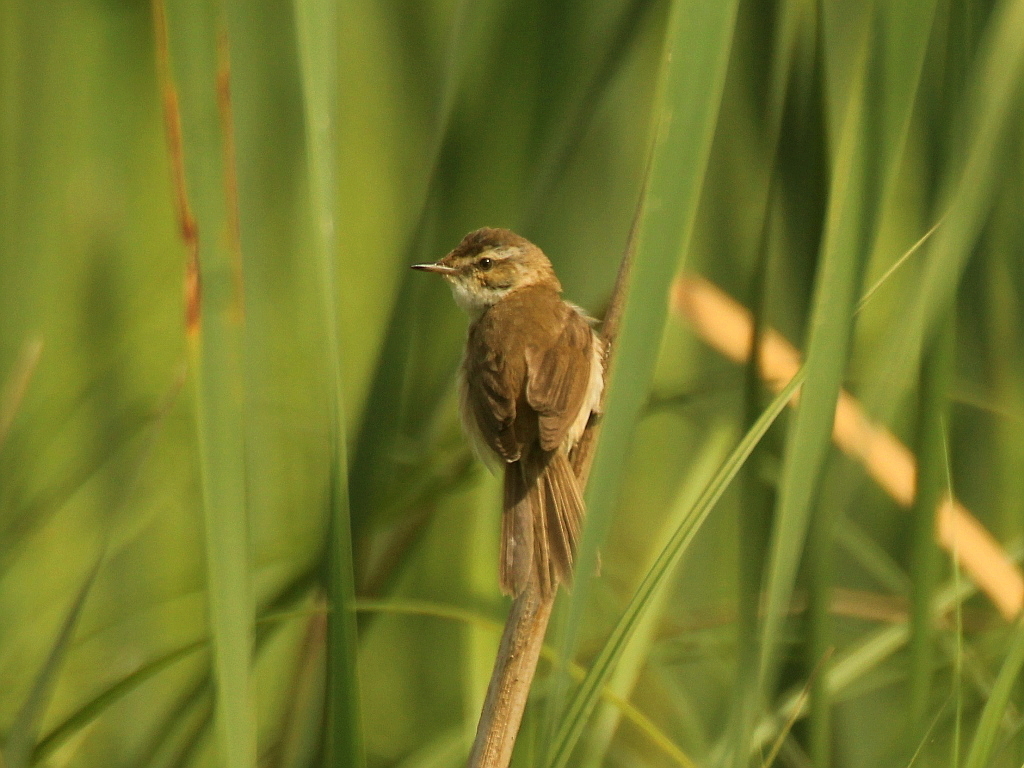
Paddyfield Warbler
Acrocephalus agricola
Birdstrong against fish, reptiles
Common
Swoop
While active with another bird in play, it hits 6 harder on its first attack after entering play (12 with two others).
31

38
Paddyfield Warbler
Acrocephalus agricola
Birdstrong against fish, reptiles
Common
While active with another bird in play, it hits 6 harder on its first attack after entering play (12 with two others).
Acrocephalus agricola
Photo: © Andrew Bazdyrev (original photo) · CC BY 4.0 (licence text) · cropped
Strong against: it deals 20% more damage to them. Weak against: these types deal 20% more damage to it.
The paddyfield warbler (Acrocephalus agricola) is a species of marsh warbler (family Acrocephalidae). It was formerly included in the "Old World warbler" assemblage. The Manchurian reed warbler (A. tangorum) was (and sometimes still is) included in A. agricola as a subspecies.
The genus name Acrocephalus is from Ancient Greek akros, "highest", and kephale, "head". It is possible that Naumann and Naumann thought akros meant "sharp-pointed". The specific agricola is from Latin and means "farmer".
It breeds in the temperate central Palearctic. It is migratory, wintering in Bangladesh, India and Pakistan. It is a rare vagrant to western Europe although there are small breeding populations along the western shores of the Black Sea around the border between Bulgaria and Romania. This passerine bird is a species found in low vegetation such as long grass, reeds and rice. 4–5 eggs are laid in a nest in grass.
At 13 cm (5.1 in) long with a wingspan of 15–17.5 cm (5.9–6.9 in), the paddyfield warbler is close in size to the Eurasian reed warbler but with shorter bill and wingspan. The adult has an unstreaked pale brown back and buff underparts, with a warm brown rump. There is a clearer whitish supercilium and the bill is short and pointed. The sexes are identical, as with most warblers, but young birds are richer buff below. Like most warblers, it is insectivorous.
Abridged excerpt from the Wikipedia article Paddyfield warbler, by its authors, under the CC BY-SA 4.0 licence.
Least Concern on the IUCN Red List: that’s what makes this card Common.
Every Common card has 100 points, shared between HP, ATK and DEF:
How they’re shared out:

 DEF 38