 …
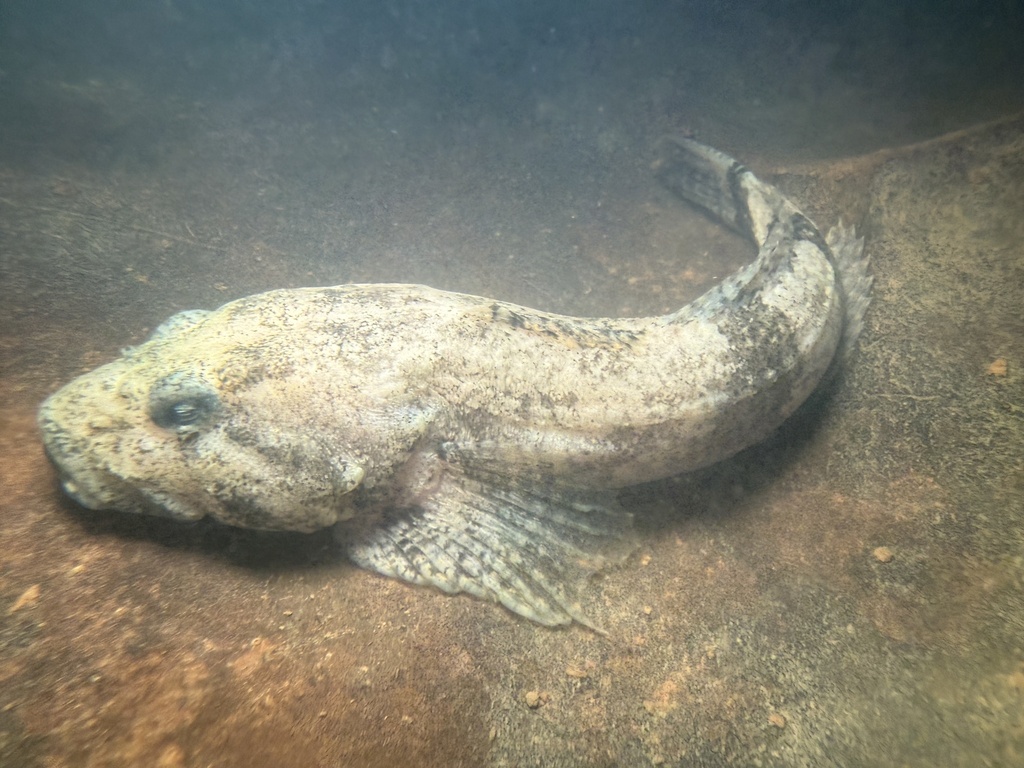
Banded Sculpin
Cottus carolinae
Fishstrong against mammals, arachnids
Common
School
While active with another fish in play, a fish on your bench absorbs up to 9 of the damage this card takes, without being knocked out (18 with two others).
32

40
Banded Sculpin
Cottus carolinae
Fishstrong against mammals, arachnids
Common
While active with another fish in play, a fish on your bench absorbs up to 9 of the damage this card takes, without being knocked out (18 with two others).
Cottus carolinae
Photo: © Nick Tobler (Cowturtle) (original photo) · CC BY 4.0 (licence text) · cropped
Strong against: it deals 20% more damage to them. Weak against: these types deal 20% more damage to it.
The banded sculpin (Cottus carolinae) is a freshwater fish dwelling mostly in small to moderate sized streams in areas of swift current. Young and juvenile C. carolinae can mainly be found in pools, riffles, and other shallow habitats while adults tend to prefer deeper waters. C. carolinae primarily eats insects and insect larvae, but their large mouths enable them to eat prey nearly as large as themselves, including other sculpin. To prevent predation, including by other fish, the color and pattern of the sculpin tends to match its environment. Most Cottus carolinae are mottled brown with dark vertical banding and usually reach about three inches in length. They have a broad head which rather quickly narrows into a slim body, giving them the appearance of a tadpole reaching adulthood.
Cottus carolinae has proven to be useful as a representative species for the effects of mining related impacts on fishing communities since it has been proven that their density is negatively correlated with higher metal concentrations from mining. In other areas around the Cumberland Basin, as a benthic fish, the C. carolinae is in danger of increased siltation by area farming. Though the sculpin faces these threats, they are not yet on the list of endangered species.
Excerpt from the Wikipedia article Banded sculpin, by its authors, under the CC BY-SA 4.0 licence.
Least Concern on the IUCN Red List: that’s what makes this card Common.
Every Common card has 100 points, shared between HP, ATK and DEF:
How they’re shared out:

 DEF 40