 …
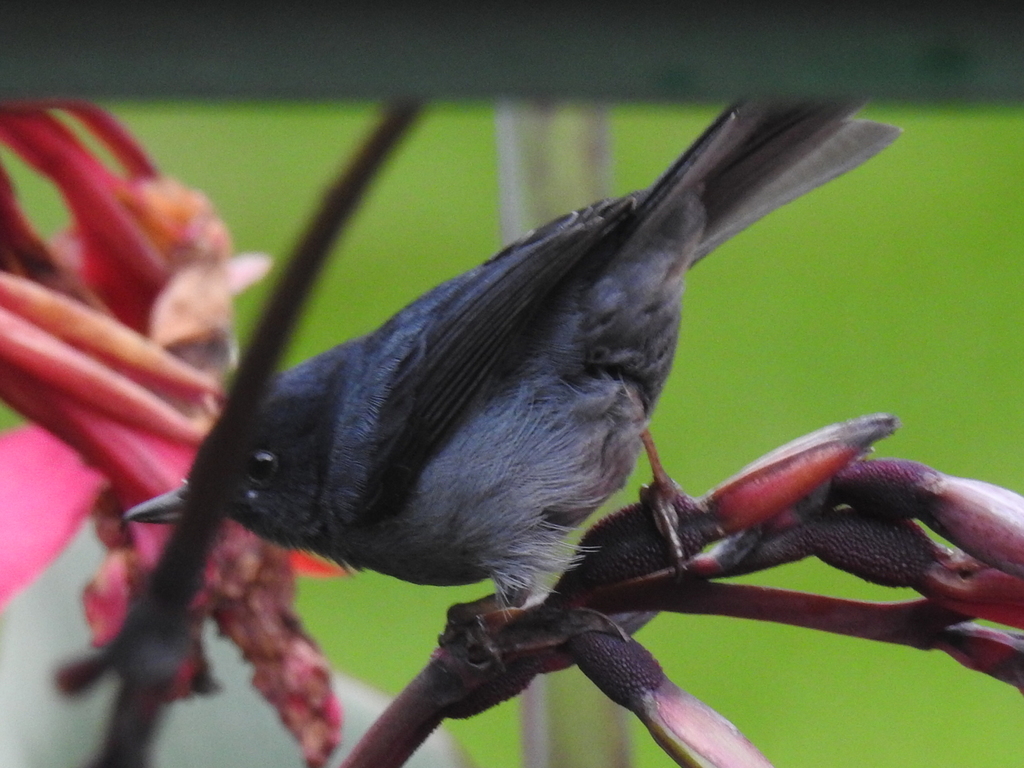
Slaty Flowerpiercer
Diglossa plumbea
Birdstrong against fish, reptiles
Common
Swoop
While active with another bird in play, it hits 6 harder on its first attack after entering play (12 with two others).
41

39
Slaty Flowerpiercer
Diglossa plumbea
Birdstrong against fish, reptiles
Common
While active with another bird in play, it hits 6 harder on its first attack after entering play (12 with two others).
Diglossa plumbea
Photo: © Sam Kieschnick (original photo) · CC BY 4.0 (licence text) · cropped
Strong against: it deals 20% more damage to them. Weak against: these types deal 20% more damage to it.
The slaty flowerpiercer (Diglossa plumbea) is a passerine bird endemic to the Talamancan montane forests.
This is a common bird in mountain forest canopy and edges, and especially in sunlit clearings and areas with flowering shrubs, which can include gardens. The lower altitudinal limit of its breeding range increases from 1200 m in the north of Costa Rica to 1900 m in the southern mountains. It is found well above the timberline in páramo habitat.
The large cup nest, built by the female, is made of coarse plant material and lined with fine fibres. It is placed 0.4 to 4 m up in a dense shrub, grass tussock or pine. The clutch is two brown-speckled pale blue eggs, which are incubated by the female alone for 12–14 days to hatching.
The slaty flowerpiercer has an upturned bill with a hooked upper mandible and pointed lower mandible. It is 10 cm long and weighs 9 g. The adult male is blue-grey with a lead-grey throat and breast. The tail and wings are blackish with grey feather edges. The female is olive-brown above with a paler throat and breast shading to buff on the belly. Young birds are like the female but have two tawny wing bars and faintly streaked buff-yellow underparts.
The slaty flowerpiercer has a thin tsip call. The male's song consists of a mixture of whistles, warbles and trilled notes, see-chew see-chew see-chew seer seer surrzeep, tsee tsew tsink tsink tsink.
Abridged excerpt from the Wikipedia article Slaty flowerpiercer, by its authors, under the CC BY-SA 4.0 licence.
Least Concern on the IUCN Red List: that’s what makes this card Common.
Every Common card has 100 points, shared between HP, ATK and DEF:
How they’re shared out:

 DEF 39