 …
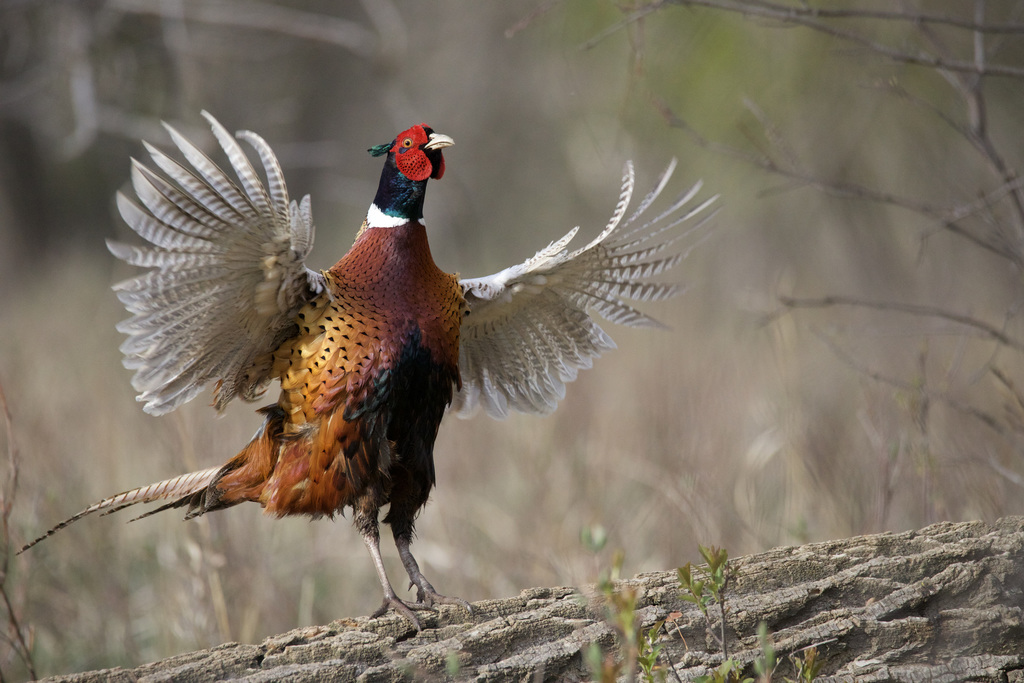
Ring-necked Pheasant
Phasianus colchicus
Birdstrong against fish, reptiles
Common
Swoop
While active with another bird in play, it hits 6 harder on its first attack after entering play (12 with two others).
30

30
Ring-necked Pheasant
Phasianus colchicus
Birdstrong against fish, reptiles
Common
While active with another bird in play, it hits 6 harder on its first attack after entering play (12 with two others).
Phasianus colchicus
Photo: © John Krampl (original photo) · CC BY 4.0 (licence text) · cropped
Strong against: it deals 20% more damage to them. Weak against: these types deal 20% more damage to it.
The common pheasant (Phasianus colchicus), ring-necked pheasant, or blue-headed pheasant, is a bird in the pheasant family (Phasianidae). The genus name comes from Latin phasianus 'pheasant'. The species name colchicus is Latin for 'of Colchis' (modern day Georgia), a country on the Black Sea where pheasants became known to Europeans. Although Phasianus was previously thought to be closely related to the genus Gallus, the genus of junglefowl and domesticated chickens, recent studies show that they are in different subfamilies, having diverged over 20 million years ago.
It is native to Asia, where it is widespread, and also to the extreme southeast of Europe in the northern foothills of the Caucasus Mountains. It has been widely introduced elsewhere as a game bird. In parts of its range, mainly in places where none of its relatives occurs such as in Europe, where it is naturalised, it is simply known as the pheasant. Ring-necked pheasant is both the collective name for a number of subspecies and their intergrades that have white neck rings and the name used for the species as a whole in North America.
Abridged excerpt from the Wikipedia article Common pheasant, by its authors, under the CC BY-SA 4.0 licence.
Least Concern on the IUCN Red List: that’s what makes this card Common.
Every Common card has 100 points, shared between HP, ATK and DEF:
How they’re shared out:

 DEF 30