 …
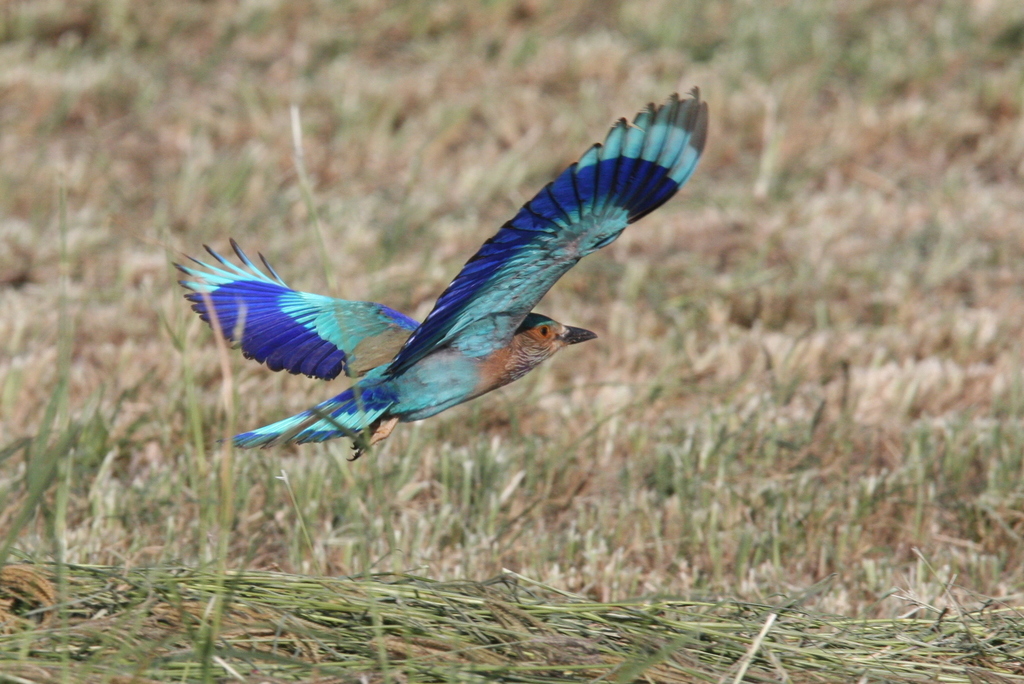
Indian Roller
Coracias benghalensis
Birdstrong against fish, reptiles
Uncommon
Swoop
While active with another bird in play, it hits 6 harder on its first attack after entering play (12 with two others).
35

43
Indian Roller
Coracias benghalensis
Birdstrong against fish, reptiles
Uncommon
While active with another bird in play, it hits 6 harder on its first attack after entering play (12 with two others).
Coracias benghalensis
Photo: © Christoph Moning (original photo) · CC BY 4.0 (licence text) · cropped
Strong against: it deals 20% more damage to them. Weak against: these types deal 20% more damage to it.
The Indian roller (Coracias benghalensis) is a bird of the family Coraciidae. It is 30–34 cm (12–13 in) long with a wingspan of 65–74 cm (26–29 in) and weighs 166–176 g (5.9–6.2 oz). The face and throat are pinkish, the head and back are brown, with blue on the rump and contrasting light and dark blue on the wings and tail. The bright blue markings on the wing are prominent in flight. The sexes are similar in appearance. Two subspecies are recognised.
The Indian roller occurs widely from West Asia to the Indian subcontinent. Often found perched on roadside trees and wires, it is common in open grassland and scrub forest habitats, and has adapted well to human-modified landscapes. It mainly feeds on insects, especially beetles. The species is best known for the aerobatic displays of males during the breeding season. Adult males and females form pair bonds and raise the young together. The female lays 3–5 eggs in a cavity or crevice, which is lined with a thin mat of straw or feathers. The roller is the state bird of three Indian states. It is listed as a species of least concern on the IUCN Red List.
Excerpt from the Wikipedia article Indian roller, by its authors, under the CC BY-SA 4.0 licence.
Near Threatened on the IUCN Red List: that’s what makes this card Uncommon.
Every Uncommon card has 115 points, shared between HP, ATK and DEF:
How they’re shared out:

 DEF 43