 …
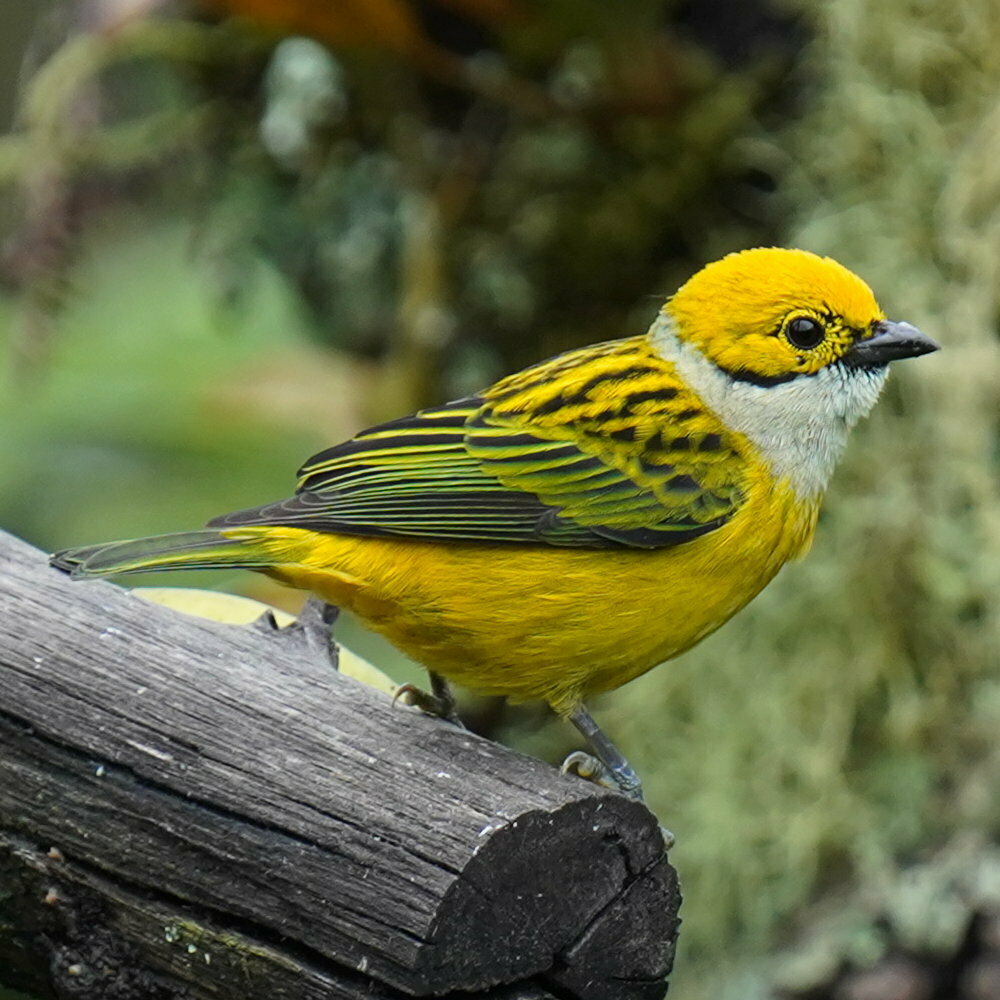
Silver-throated Tanager
Tangara icterocephala
Birdstrong against fish, reptiles
Common
Swoop
While active with another bird in play, it hits 6 harder on its first attack after entering play (12 with two others).
41

39
Silver-throated Tanager
Tangara icterocephala
Birdstrong against fish, reptiles
Common
While active with another bird in play, it hits 6 harder on its first attack after entering play (12 with two others).
Tangara icterocephala
Photo: © Daniel S. Katz (original photo) · CC BY 4.0 (licence text) · cropped
Strong against: it deals 20% more damage to them. Weak against: these types deal 20% more damage to it.
The silver-throated tanager (Tangara icterocephala) is a species of passerine bird in the tanager family Thraupidae. It is found in Costa Rica, Panama, Colombia, Ecuador, and northeastern Peru. It inhabits mossy forests, montane forests, tropical lowland evergreen forests and forest edges, along with tall secondary forests and disturbed habitat with remnant trees and forest. It is 13 centimetres (5.1 in) long and weighs 22 grams (0.78 oz) on average, and shows slight sexual dimorphism, with duller female plumage. Adult males are mainly bright yellow, with a silvery-white throat bordered above with a black stripe on the cheeks, black streaking on the back, and green edges to the wings and tail. Juveniles are duller and greener.
The silver-throated tanager is omnivorous, and mainly feeds on fruits, especially melastomes, supplemented with arthropods. Breeding occurs from April–September, and two broods are raised in a single breeding season. Cup nests are built by females out of moss, leaves, and spider webs in forests or isolated trees. Eggs are laid in clutches of two and incubated by females. Nestlings leave the nest at around 15 days old. The silver-throated tanager is listed as being of least concern by the International Union for Conservation of Nature (IUCN) on the IUCN Red List, but is threatened by habitat destruction.
Excerpt from the Wikipedia article Silver-throated tanager, by its authors, under the CC BY-SA 4.0 licence.
Least Concern on the IUCN Red List: that’s what makes this card Common.
Every Common card has 100 points, shared between HP, ATK and DEF:
How they’re shared out:

 DEF 39