 …
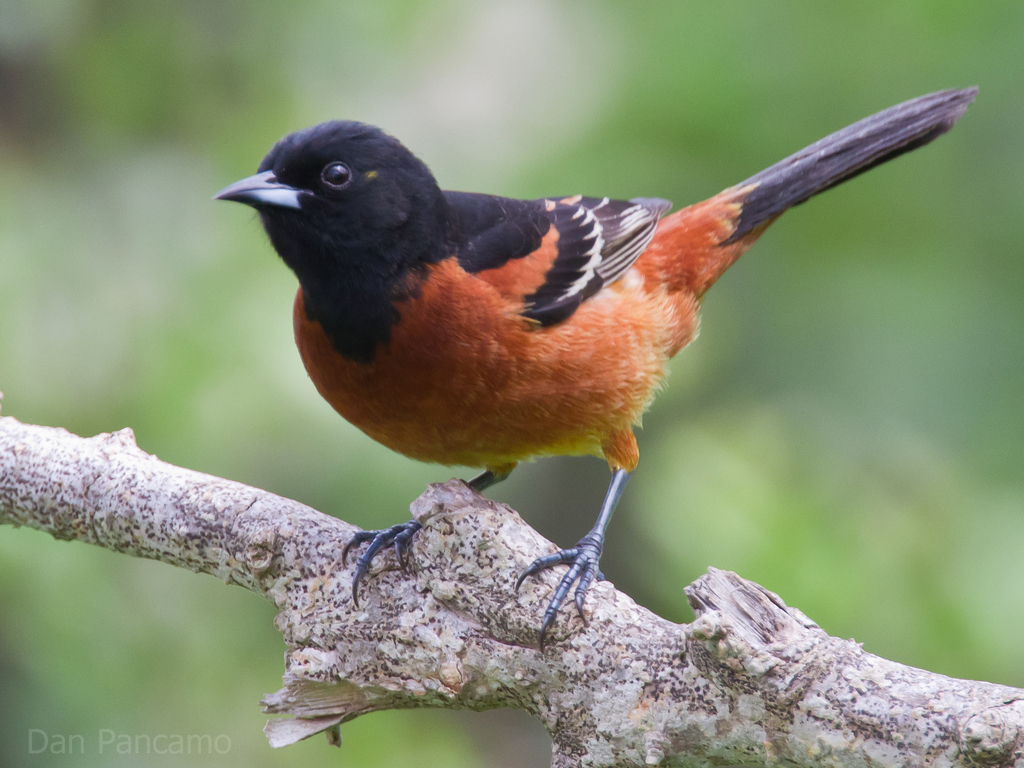
Orchard Oriole
Icterus spurius
Birdstrong against fish, reptiles
Common
Swoop
While active with another bird in play, it hits 6 harder on its first attack after entering play (12 with two others).
43

38
Orchard Oriole
Icterus spurius
Birdstrong against fish, reptiles
Common
While active with another bird in play, it hits 6 harder on its first attack after entering play (12 with two others).
Icterus spurius
Photo: © Dan Pancamo (original photo) · CC BY-SA 4.0 (licence text) · cropped
Strong against: it deals 20% more damage to them. Weak against: these types deal 20% more damage to it.
The orchard oriole (Icterus spurius) is the smallest species of icterid. The subspecies of the Caribbean coast of Mexico, I. s. fuertesi, is sometimes considered a separate species, the ochre oriole or Fuertes's oriole.
The orchard oriole is a small bird with a length of 5.9-7.1 inches, a weight of 0.6-1.0 ounces, and a wingspan of 9.8 inches. Adult males have chestnut or ochre underparts, while adult females and juveniles have olive-green upper parts and yellowish breasts and bellies. They inhabit semi-open areas with deciduous trees in eastern North America, southern Tamaulipas, and Veracruz. Their winter range extends from central Sinaloa and southern Veracruz to northern Colombia and northwestern Venezuela.
Orchard orioles prefer living near lakes and streams, nesting in tightly woven pouches attached to horizontal tree branches. They are nocturnal migrants and feed on insects, spiders, fruit, nectar, and seeds depending on the season. During flight, they usually swoop close to the ground and fly at or below treetop level. Courtship displays include bowing, seesawing, and begging. The species name "spurius" refers to their original misidentification as female Baltimore orioles, and they are sometimes mistaken for New World warblers.
Excerpt from the Wikipedia article Orchard oriole, by its authors, under the CC BY-SA 4.0 licence.
Least Concern on the IUCN Red List: that’s what makes this card Common.
Every Common card has 100 points, shared between HP, ATK and DEF:
How they’re shared out:

 DEF 38