 …
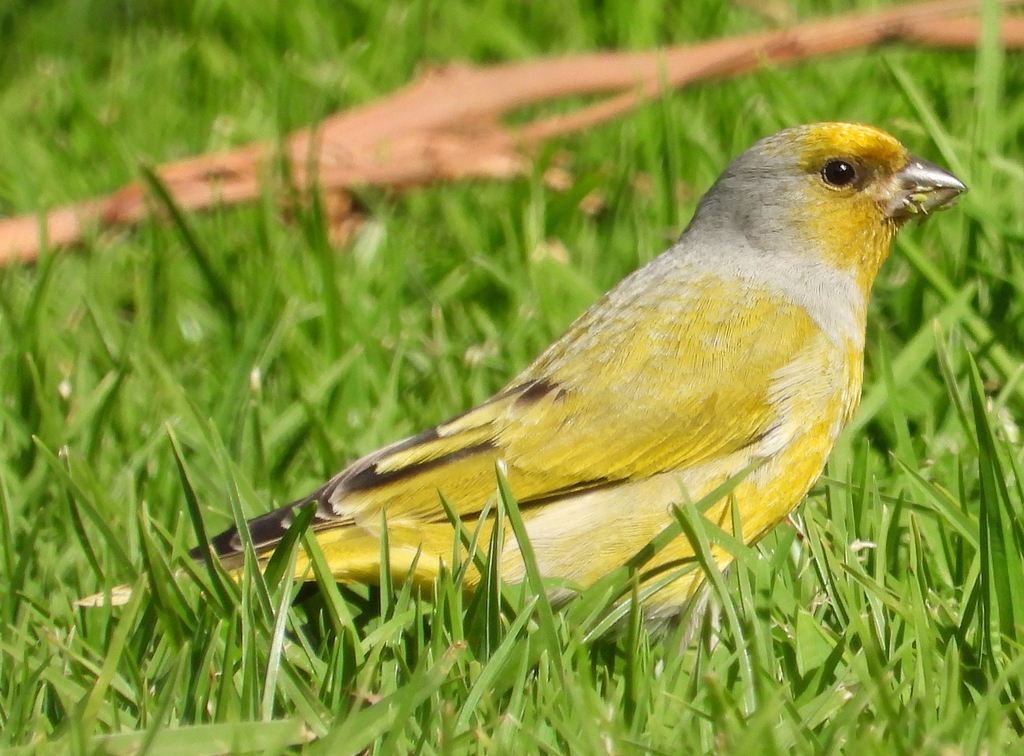
Cape Canary
Serinus canicollis
Birdstrong against fish, reptiles
Common
Swoop
While active with another bird in play, it hits 6 harder on its first attack after entering play (12 with two others).
40

40
Cape Canary
Serinus canicollis
Birdstrong against fish, reptiles
Common
While active with another bird in play, it hits 6 harder on its first attack after entering play (12 with two others).
Serinus canicollis
Photo: © Timothy Whitehead (original photo) · CC BY 4.0 (licence text) · cropped
Strong against: it deals 20% more damage to them. Weak against: these types deal 20% more damage to it.
The Cape canary (Serinus canicollis) is a small passerine bird in the finch family. It is a resident breeder in southern Africa and has been introduced to Mauritius and Réunion. It is a residential bird but shows seasonal and altitudinal movements, sometimes forming large flocks outside the breeding season.
Its habitat is fynbos, grassland and gardens, preferably in highland areas. It builds a compact cup nest in a scrub. It inhabits a variety of terrestrial habitats, from forest edges to montane areas, foraging mainly on seeds in pairs or flocks. Breeding occurs from August to February. Nest are built by females and both parents feed chicks, which typically fledge in 2-3 weeks.
The Cape canary is 11–13 cm in length. The adult male has a green back with black edging to the wing feathers wings and tail. The underparts, rump and tail sides are yellow, and the lower belly is white. The rear head and neck are grey, and the face is cinnamon. The female is similar, but with less grey on the head. The juvenile has greenish-yellow underparts with heavy brown streaking. This species is easily distinguished from the yellow-fronted canary by its lack of black face markings.
The Cape canary is a common and gregarious seed-eater. Its call is tsit-it-it, and the song is warbled goldfinch-like trills and whistles given in display flight or from a high perch.
Abridged excerpt from the Wikipedia article Cape canary, by its authors, under the CC BY-SA 4.0 licence.
Least Concern on the IUCN Red List: that’s what makes this card Common.
Every Common card has 100 points, shared between HP, ATK and DEF:
How they’re shared out:

 DEF 40