 …
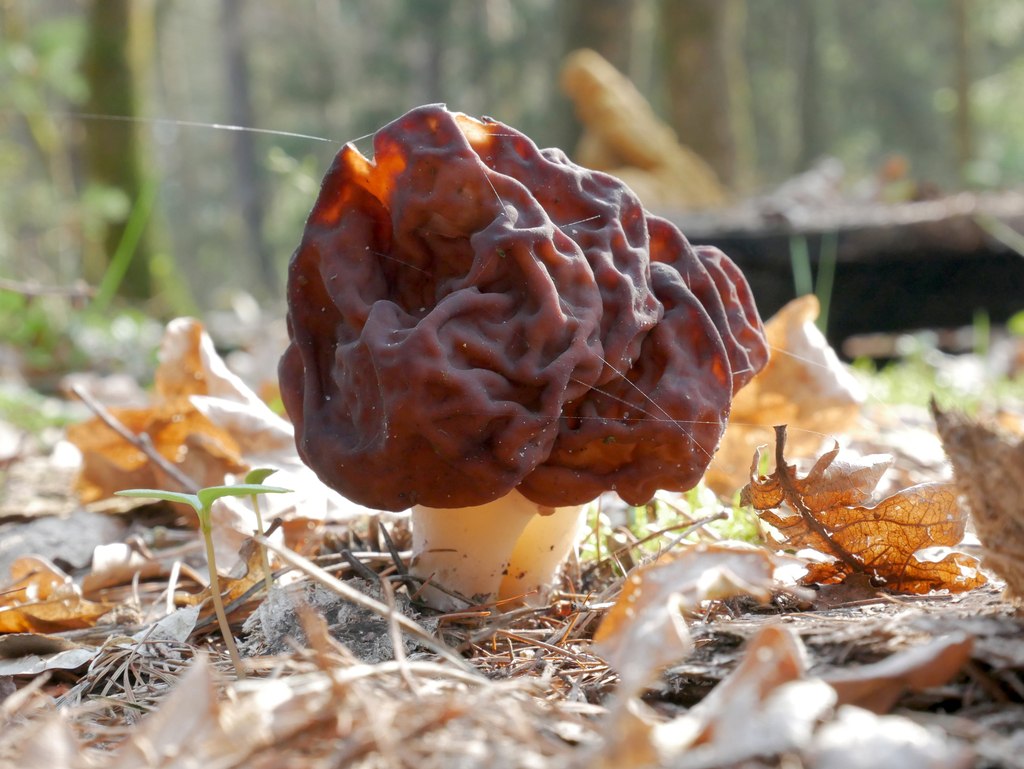
False Morel
Gyromitra esculenta
Fungusstrong against amphibians, reptiles
Common
Mycelium
While active with another fungus in play, it regains 5 HP at the start of your turn (8 with two others).
41

28
False Morel
Gyromitra esculenta
Fungusstrong against amphibians, reptiles
Common
While active with another fungus in play, it regains 5 HP at the start of your turn (8 with two others).
Gyromitra esculenta
Photo: iNaturalist (original photo) · CC0 (licence text) · cropped
Strong against: it deals 20% more damage to them. Weak against: these types deal 20% more damage to it.
Gyromitra esculenta is an ascomycete fungus from the genus Gyromitra. The fruiting body, or mushroom, is an irregular brain-shaped cap, dark brown in colour, that can reach 10 centimetres (4 inches) high and 15 cm (6 in) wide, perched on a stout white stipe up to 6 cm (2+1⁄2 in) high. It is widely distributed across Europe and North America, normally fruiting in sandy soils under coniferous trees in spring and early summer.
Although potentially fatal if eaten raw, G. esculenta is sometimes parboiled for consumption, being a popular delicacy in Europe and the upper Great Lakes region of North America. However, evidence suggests that thorough cooking does not eliminate all toxins. When consumed, the principal active mycotoxin, gyromitrin, is hydrolyzed into the toxic compound monomethylhydrazine, which affects the liver, central nervous system, and sometimes the kidneys. Symptoms involve vomiting and diarrhea several hours after consumption, followed by dizziness, lethargy and headache. Severe cases may lead to delirium, coma, and death. Recent evidence suggests G. esculenta may be chronically toxic and linked to regional clusters of ALS.
Excerpt from the Wikipedia article Gyromitra esculenta, by its authors, under the CC BY-SA 4.0 licence.
No global status on the IUCN Red List: that’s what makes this card Common.
Every Common card has 100 points, shared between HP, ATK and DEF:
How they’re shared out:

 DEF 28