 …
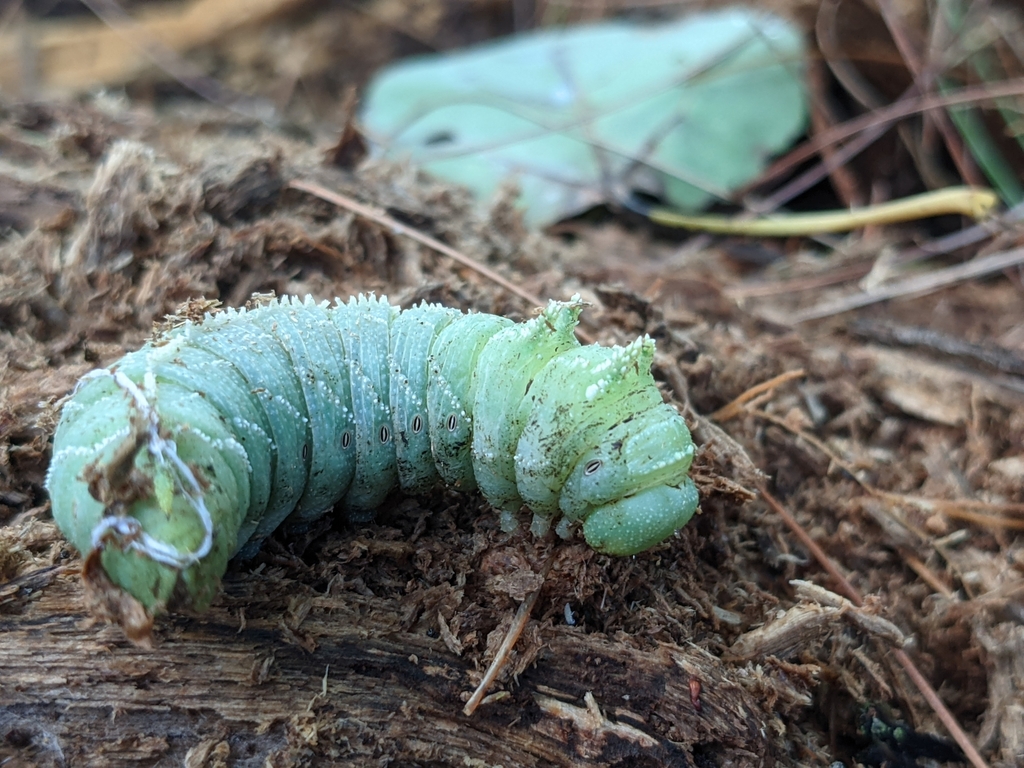
Elm Sphinx
Ceratomia amyntor
Insectstrong against fungi, fish
Common
Swarm
While active with another insect in play, each of its attacks also hits the opposing bench for 10, without knocking them out (20 with two others).
41

36
Elm Sphinx
Ceratomia amyntor
Insectstrong against fungi, fish
Common
While active with another insect in play, each of its attacks also hits the opposing bench for 10, without knocking them out (20 with two others).
Ceratomia amyntor
Photo: © Jason Hill (original photo) · CC BY 4.0 (licence text) · cropped
Strong against: it deals 20% more damage to them. Weak against: these types deal 20% more damage to it.
Ceratomia amyntor, the elm sphinx or four-horned sphinx, is a North American moth in the family Sphingidae. The species was first described by Carl Geyer in 1835. It has a wingspan of 3+1⁄4-4+1⁄2 inches (8.2 - 11.5 cm). As the name suggests, the larvae (caterpillars) feed on elm trees (Ulmus), but they can also be found feeding on birch (Betula), basswood (Tilia), and cherry (Prunus). When the caterpillars are ready, they crawl to the bottom of the host tree, where they crawl underneath the soil and pupate and may overwinter underground if late enough into the year.
Excerpt from the Wikipedia article Ceratomia amyntor, by its authors, under the CC BY-SA 4.0 licence.
No global status on the IUCN Red List: that’s what makes this card Common.
Every Common card has 100 points, shared between HP, ATK and DEF:
How they’re shared out:

 DEF 36