 …
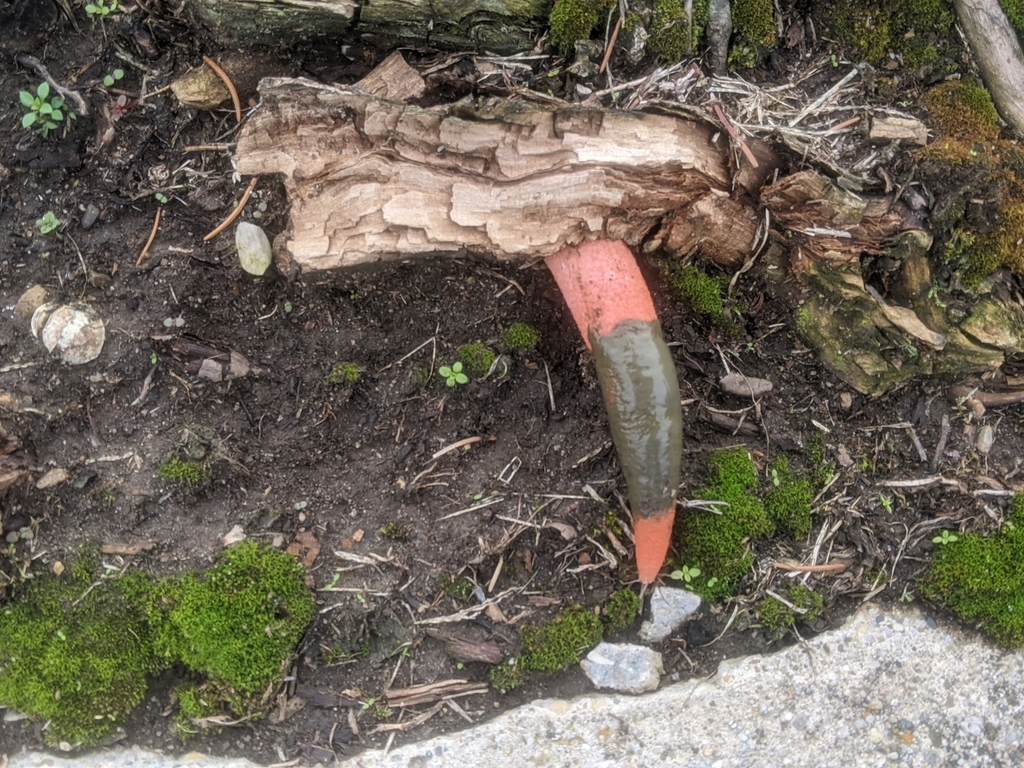
devil's dipstick
Mutinus elegans
Fungusstrong against amphibians, reptiles
Common
Mycelium
While active with another fungus in play, it regains 5 HP at the start of your turn (8 with two others).
40

29
devil's dipstick
Mutinus elegans
Fungusstrong against amphibians, reptiles
Common
While active with another fungus in play, it regains 5 HP at the start of your turn (8 with two others).
Mutinus elegans
Photo: © J.S. Carter (original photo) · CC BY 4.0 (licence text) · cropped
Strong against: it deals 20% more damage to them. Weak against: these types deal 20% more damage to it.
Mutinus elegans, commonly known as the elegant stinkhorn, the headless stinkhorn, or the devil's dipstick, is a species of fungus in the Phallaceae (stinkhorn) family. It is also known as dog stinkhorn but using this name can lead to confusion with Mutinus caninus. The fruit body begins its development in an "egg" form, resembling somewhat a puffball partially submerged in the ground. As the fungus matures, a slender orange to pink colored stalk emerges that tapers evenly to a pointed tip. The stalk is covered with a foul-smelling slimy green spore mass on the upper third of its length. Flies and other insects feed upon the slime which contains the spores, assisting in their dispersal.
A saprobic species, it is typically found growing on the ground singly or in small groups on woody debris or leaf litter, during summer and autumn in Japan, Europe, and eastern North America. Due to their repellent odor, mature specimens are not generally considered edible, although there are reports of the immature "eggs" being consumed. In the laboratory, Mutinus elegans has been shown to inhibit the growth of several microorganisms that can be pathogenic to humans.
Excerpt from the Wikipedia article Mutinus elegans, by its authors, under the CC BY-SA 4.0 licence.
No global status on the IUCN Red List: that’s what makes this card Common.
Every Common card has 100 points, shared between HP, ATK and DEF:
How they’re shared out:

 DEF 29