 …
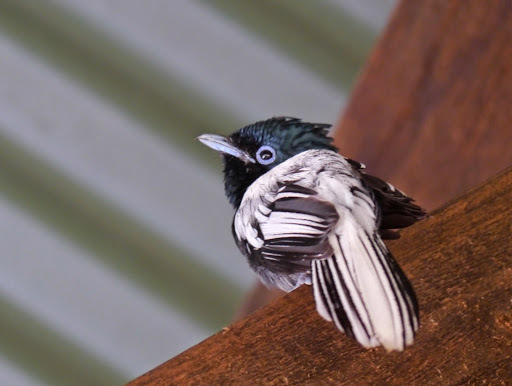
African Paradise-Flycatcher
Terpsiphone viridis
Birdstrong against fish, reptiles
Common
Swoop
While active with another bird in play, it hits 6 harder on its first attack after entering play (12 with two others).
40

41
African Paradise-Flycatcher
Terpsiphone viridis
Birdstrong against fish, reptiles
Common
While active with another bird in play, it hits 6 harder on its first attack after entering play (12 with two others).
Terpsiphone viridis
Photo: © 116916927065934112165 (original photo) · CC BY 4.0 (licence text) · cropped
Strong against: it deals 20% more damage to them. Weak against: these types deal 20% more damage to it.
The African paradise flycatcher (Terpsiphone viridis) is a medium-sized passerine bird. The two central tail feathers of the male are extended into streamers that commonly are more than twice as long as the body. The female tail feathers are of moderate length and without streamers. The upper parts of the male body, wings, and tail are boldly coloured in chestnut or rusty shades, but the underparts and the head are variably grey to blue-gray, with the head of the mature male being darker, commonly glossy black with greenish highlights. The beak and other bare areas, including a wattle ring round the eye, match the colour of the surrounding feathers. The female coloration is similar, though not so showy and glossy and with the head paler.
The African paradise flycatcher feeds mainly on insects. It builds a neat cup nest in which it lays a clutch, usually of two or three eggs. It generally inhabits open forest and savanna, and is a locally common resident breeder in Africa south of the Sahara. The International Union for Conservation of Nature has listed it as being of "least concern".
This is the original bird known as ọ̀kín in Yorùbá language instead of the peacock.
Excerpt from the Wikipedia article African paradise flycatcher, by its authors, under the CC BY-SA 4.0 licence.
Least Concern on the IUCN Red List: that’s what makes this card Common.
Every Common card has 100 points, shared between HP, ATK and DEF:
How they’re shared out:

 DEF 41