 …
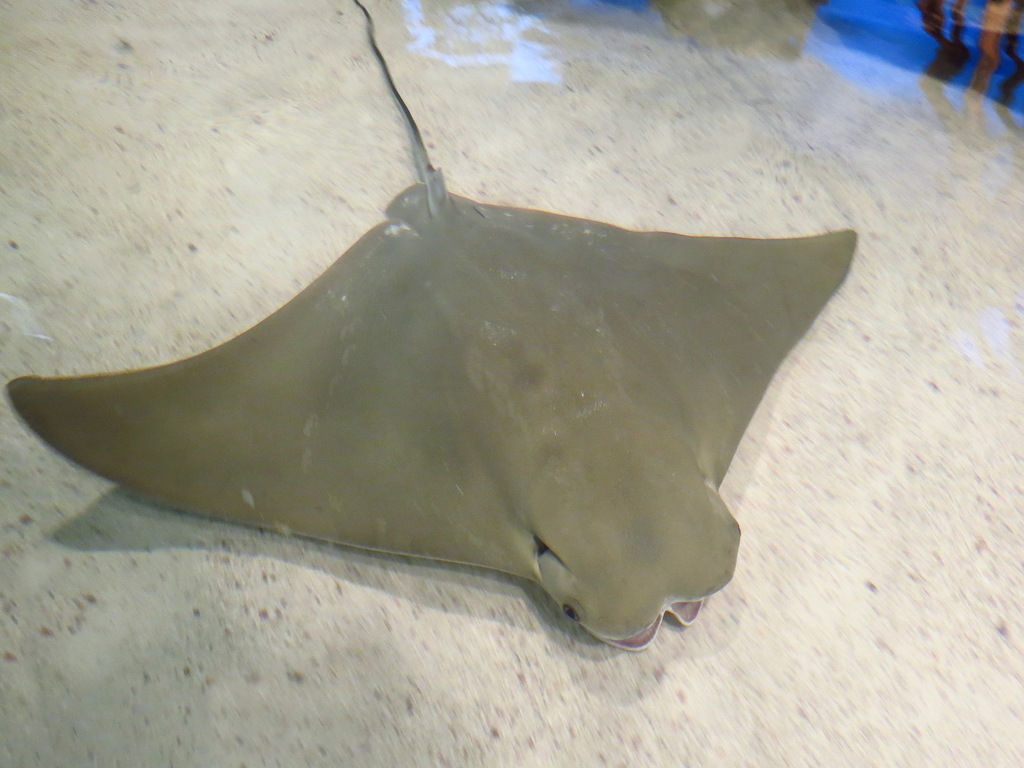
Cownose Ray
Rhinoptera bonasus
Fishstrong against mammals, arachnids
Rare
School
While active with another fish in play, a fish on your bench absorbs up to 9 of the damage this card takes, without being knocked out (18 with two others).
40

43
Cownose Ray
Rhinoptera bonasus
Fishstrong against mammals, arachnids
Rare
While active with another fish in play, a fish on your bench absorbs up to 9 of the damage this card takes, without being knocked out (18 with two others).
Rhinoptera bonasus
Photo: © Robert Linsdell (original photo) · CC BY 4.0 (licence text) · cropped
Strong against: it deals 20% more damage to them. Weak against: these types deal 20% more damage to it.
The cownose ray (Rhinoptera bonasus) is a species found throughout a large part of the western Atlantic and Caribbean, from New England to southern Brazil (the East Atlantic ones are now generally considered a separate species, the Lusitanian cownose ray (R. marginata)). These rays also belong to the order Myliobatiformes, a group that is shared by bat rays, manta rays, and eagle rays.
Cownose rays prefer to live in shallower, coastal waters or estuaries. Size, lifespan, and maturity differ between male and female rays. Rays have a distinct shape, with two lobes at the front of their head, resembling a cow nose. Cownose rays can live between 16 and 21 years, depending on sex. Rays feed upon organisms with harder shells, such as clams, crustaceans, or mollusks. They are migratory creatures, south in the winter and north in the summer. The rays are known to occupy the Chesapeake Bay in the summer.
In 2019, the species was listed as vulnerable on the IUCN Red List. The species has been subjected to overfishing due to the perceived threat of overpopulation in the Chesapeake Bay. Few conservation strategies or efforts have been undertaken for cownose rays.
Excerpt from the Wikipedia article Cownose ray, by its authors, under the CC BY-SA 4.0 licence.
Vulnerable on the IUCN Red List: that’s what makes this card Rare.
Every Rare card has 130 points, shared between HP, ATK and DEF:
How they’re shared out:

 DEF 43