 …
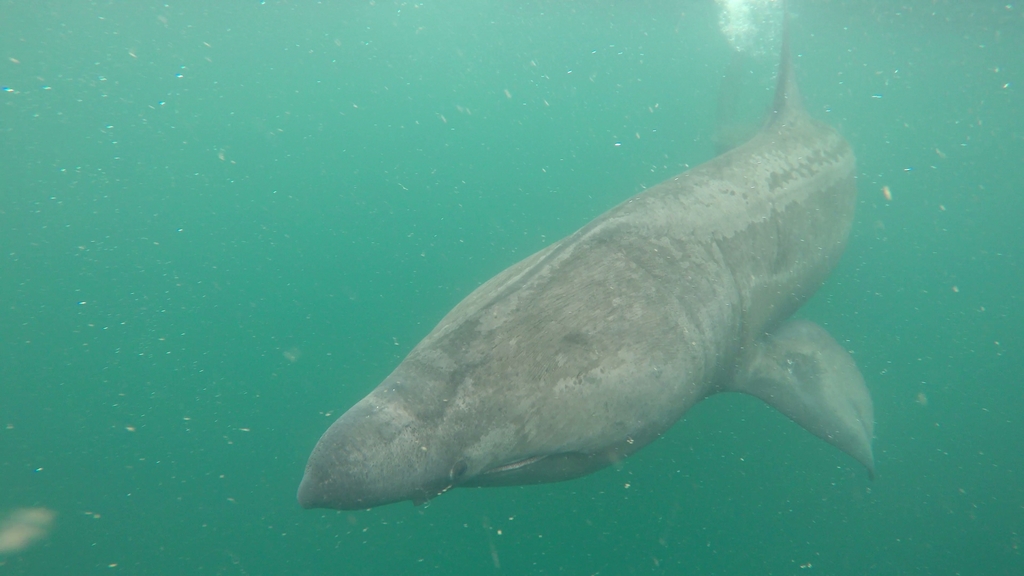
Basking Shark
Cetorhinus maximus
Fishstrong against mammals, arachnids
Epic
School
While active with another fish in play, a fish on your bench absorbs up to 9 of the damage this card takes, without being knocked out (18 with two others).
39

42
Basking Shark
Cetorhinus maximus
Fishstrong against mammals, arachnids
Epic
While active with another fish in play, a fish on your bench absorbs up to 9 of the damage this card takes, without being knocked out (18 with two others).
Cetorhinus maximus
Photo: © Fábio Olmos (original photo) · CC BY 4.0 (licence text) · cropped
Strong against: it deals 20% more damage to them. Weak against: these types deal 20% more damage to it.
The basking shark (Cetorhinus maximus) is the second-largest living shark and fish, after the whale shark. It is one of three plankton-eating shark species, along with the whale shark and megamouth shark. Typically, basking sharks reach 7.9 m (26 ft) in length, but large individuals have been known to grow more than 10 m (33 ft) long. It is usually greyish-brown, with mottled skin, with the inside of the mouth being white in colour. The caudal fin has a strong lateral keel and a crescent shape. Other common names include bone shark, elephant shark, sailfish, and sunfish.
The basking shark is a cosmopolitan migratory species found in all the world's temperate oceans. A slow-moving filter feeder, its common name derives from its habit of feeding at the surface, appearing to be basking in the warmer water there. It has anatomical adaptations for filter-feeding, such as a greatly enlarged mouth and highly developed gill rakers. Its snout is conical, and the gill slits extend around the top and bottom of its head. The gill rakers, dark and bristle-like, are used to catch plankton as water filters through the mouth and over the gills. The teeth are numerous, often numbering 100 per row. The teeth are very small, have a single conical cusp, are curved backwards, and are the same on both the upper and lower jaws. This species has the smallest weight-for-weight brain size of any shark, reflecting its relatively passive lifestyle.
Abridged excerpt from the Wikipedia article Basking shark, by its authors, under the CC BY-SA 4.0 licence.
Endangered on the IUCN Red List: that’s what makes this card Epic.
Every Epic card has 145 points, shared between HP, ATK and DEF:
How they’re shared out:

 DEF 42