 …
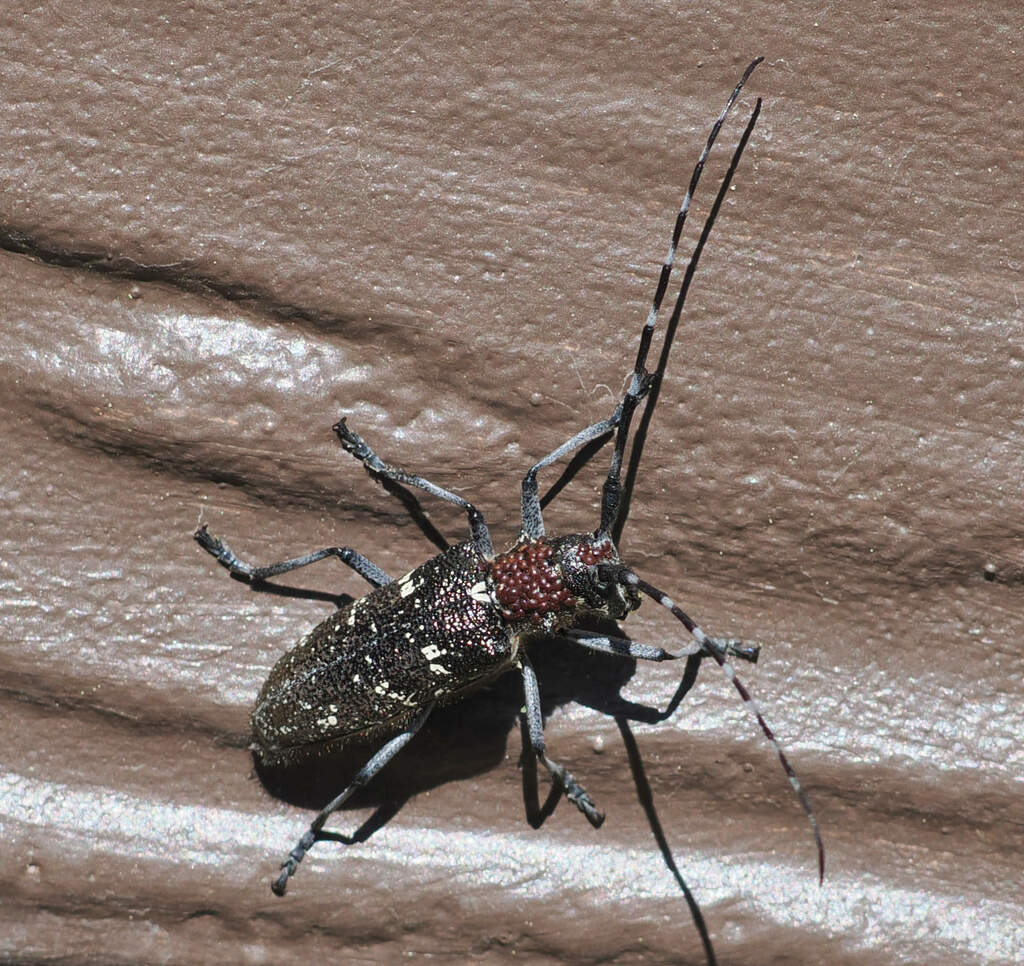
White-spotted Sawyer
Monochamus scutellatus
Insectstrong against fungi, fish
Common
Swarm
While active with another insect in play, each of its attacks also hits the opposing bench for 10, without knocking them out (20 with two others).
42

35
White-spotted Sawyer
Monochamus scutellatus
Insectstrong against fungi, fish
Common
While active with another insect in play, each of its attacks also hits the opposing bench for 10, without knocking them out (20 with two others).
Monochamus scutellatus
Photo: © Wendy McCrady (original photo) · CC BY 4.0 (licence text) · cropped
Strong against: it deals 20% more damage to them. Weak against: these types deal 20% more damage to it.
Monochamus scutellatus, commonly known as the white-spotted sawyer or spruce sawyer or spruce bug or a hair-eater, is a common wood-boring beetle found throughout North America. It is a species native to North America.
Adults are large-bodied and black, with very long antennae; in males, they can be up to twice the body length, but in females they are only slightly longer than body length. Both sexes have a white spot on the base of the wings, and may have white spots covering the wings. Both males and females also have a spine on the side of the prothorax. Most research done on M. scutellatus focuses on their relationship with burned forests and the logging industry, with interest also being shown in their mating behaviours.
Excerpt from the Wikipedia article Monochamus scutellatus, by its authors, under the CC BY-SA 4.0 licence.
No global status on the IUCN Red List: that’s what makes this card Common.
Every Common card has 100 points, shared between HP, ATK and DEF:
How they’re shared out:

 DEF 35