 …
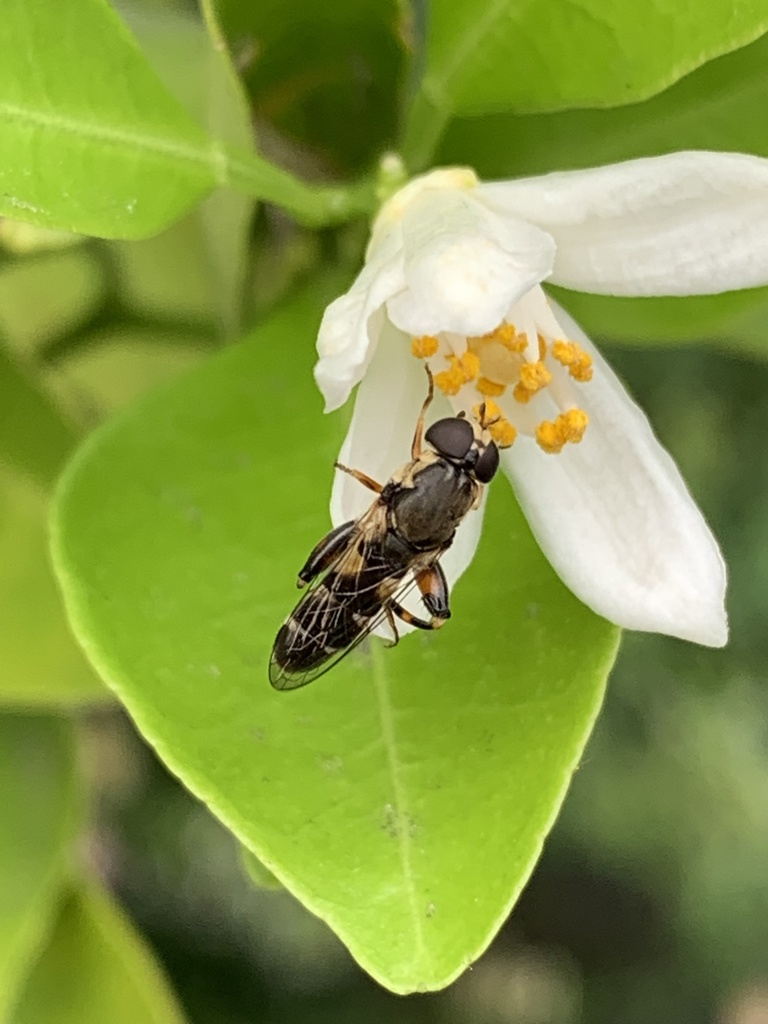
Thick-legged Hover Fly
Syritta pipiens
Insectstrong against fungi, fish
Common
Swarm
While active with another insect in play, each of its attacks also hits the opposing bench for 10, without knocking them out (20 with two others).
42

38
Thick-legged Hover Fly
Syritta pipiens
Insectstrong against fungi, fish
Common
While active with another insect in play, each of its attacks also hits the opposing bench for 10, without knocking them out (20 with two others).
Syritta pipiens
Photo: iNaturalist (original photo) · CC0 (licence text) · cropped
Strong against: it deals 20% more damage to them. Weak against: these types deal 20% more damage to it.
Syritta pipiens, sometimes called the thick-legged hoverfly, is one of the most common species in the insect family Syrphidae. This fly originates from Europe and is currently distributed across Eurasia and North America. They are fast and nimble fliers, and their larvae are found in wet, rotting organic matter such as garden compost, manure, and silage. The species is also commonly found in human-created environments such as most farmland, gardens, and urban parks, wherever there are flowers. This species is an important part of its native ecosystem as adult Syritta pipiens flies are critical pollinators for a variety of flowering plants and the species supports parasitism by various parasitic wasp species. Thus, they play an important role in environmental functionality, and can serve as bio-indicators, in which their abundance can reflect the health of the environment. Syritta pipiens looks like many predatory hoverfly species, yet is not predatory.
Excerpt from the Wikipedia article Syritta pipiens, by its authors, under the CC BY-SA 4.0 licence.
No global status on the IUCN Red List: that’s what makes this card Common.
Every Common card has 100 points, shared between HP, ATK and DEF:
How they’re shared out:

 DEF 38