 …
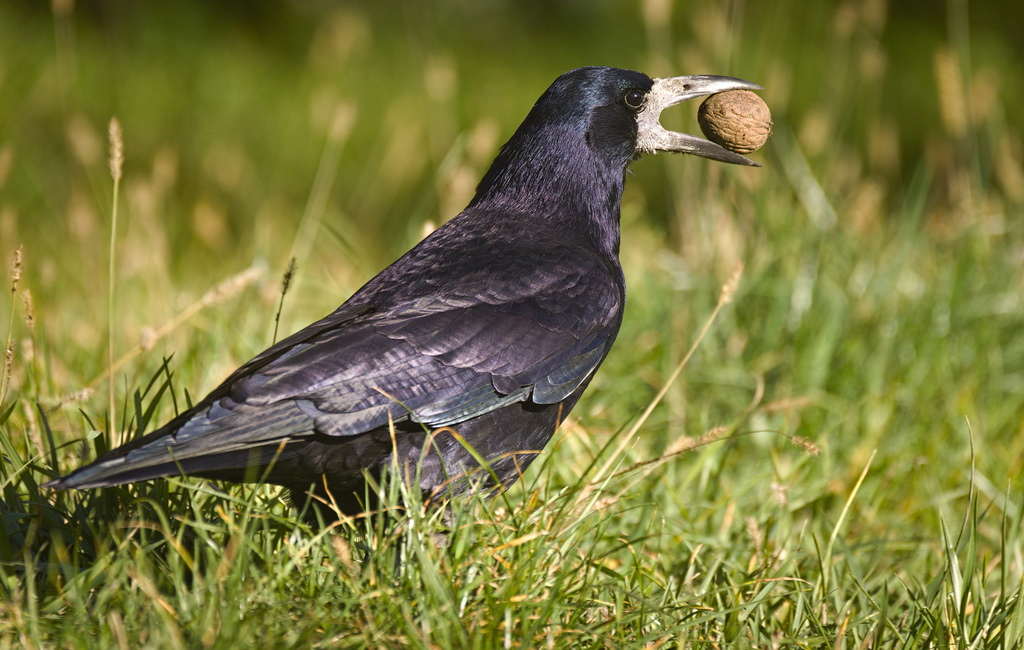
Rook
Corvus frugilegus
Birdstrong against fish, reptiles
Common
Swoop
While active with another bird in play, it hits 6 harder on its first attack after entering play (12 with two others).
32

31
Rook
Corvus frugilegus
Birdstrong against fish, reptiles
Common
While active with another bird in play, it hits 6 harder on its first attack after entering play (12 with two others).
Corvus frugilegus
Photo: © hedera.baltica (original photo) · CC BY-SA 4.0 (licence text) · cropped
Strong against: it deals 20% more damage to them. Weak against: these types deal 20% more damage to it.
The rook (Corvus frugilegus) is a member of the family Corvidae in the passerine order of birds. It is found in the Palearctic, its range extending from Scandinavia and western Europe to eastern Siberia. It is a large, gregarious, black-feathered bird, distinguished from similar species by the whitish featherless area on the face. Rooks nest collectively in the tops of tall trees, often close to farms or villages; the groups of nests are known as rookeries.
Rooks are mainly resident birds, but the northernmost populations may migrate southwards to avoid the harshest winter conditions. The birds form flocks in winter, often in the company of other Corvus species or jackdaws. They return to their rookeries, and breeding takes place in spring. They forage on arable land and pasture, probing the ground with their strong bills and feeding largely on grubs and soil-based invertebrates, but they also consume cereals and other plant material. Historically, farmers have accused the birds of damaging their crops and have made efforts to drive them away or kill them. Like other corvids, they are intelligent birds with complex behavioural traits and an ability to solve simple problems.
Excerpt from the Wikipedia article Rook (bird), by its authors, under the CC BY-SA 4.0 licence.
Least Concern on the IUCN Red List: that’s what makes this card Common.
Every Common card has 100 points, shared between HP, ATK and DEF:
How they’re shared out:

 DEF 31