 …
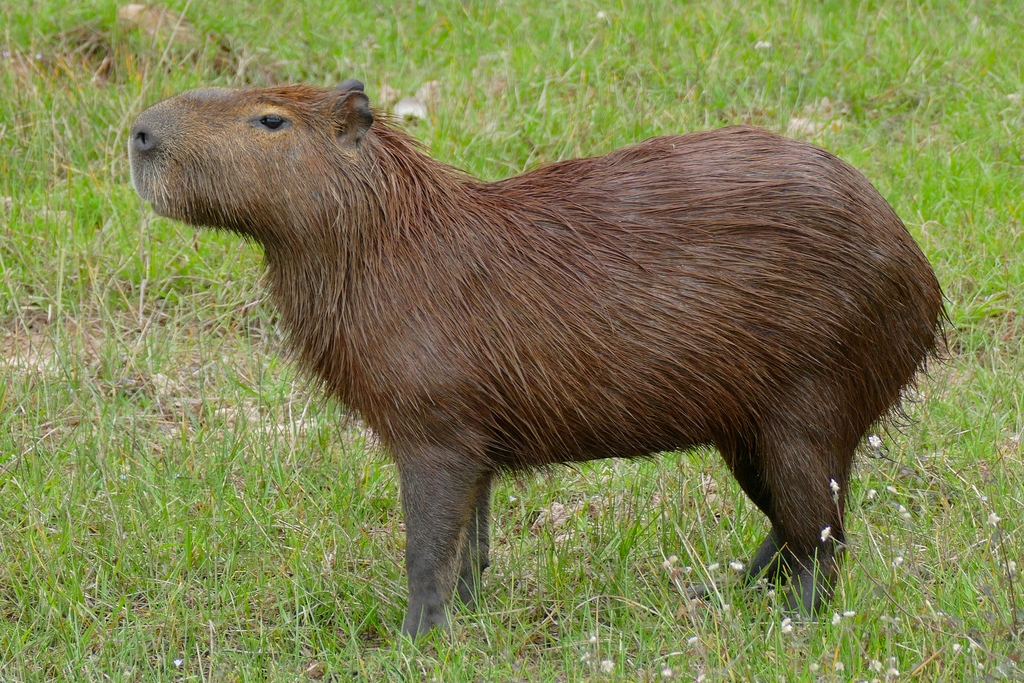
Capybara
Hydrochoerus hydrochaeris
Mammalstrong against birds, fungi
Common
Pack
While active with another mammal in play, it hits 7 harder (14 with two others).
45

30
Capybara
Hydrochoerus hydrochaeris
Mammalstrong against birds, fungi
Common
While active with another mammal in play, it hits 7 harder (14 with two others).
Hydrochoerus hydrochaeris
Photo: © Bernard DUPONT (original photo) · CC BY-SA 4.0 (licence text) · cropped
Strong against: it deals 20% more damage to them. Weak against: these types deal 20% more damage to it.
The capybara ( kap-ih-BAR-uh) or greater capybara (Hydrochoerus hydrochaeris) is the largest living rodent, native to all countries in South America except Chile. It is a semiaquatic herbivore that inhabits savannas and dense forests, living near and in bodies of freshwater and feeding mainly on grasses and aquatic plants.
Together with the lesser capybara, it constitutes the genus Hydrochoerus. Its other close relatives include guinea pigs and rock cavies, and it is more distantly related to the agouti, the chinchilla, and the nutria.
The capybara is a highly social species that usually lives in groups of 10–20 individuals, but can be found in groups as large as 100. It is hunted for its meat and hide and for grease from its thick fatty skin.
Excerpt from the Wikipedia article Capybara, by its authors, under the CC BY-SA 4.0 licence.
Least Concern on the IUCN Red List: that’s what makes this card Common.
Every Common card has 100 points, shared between HP, ATK and DEF:
How they’re shared out:

 DEF 30