 …
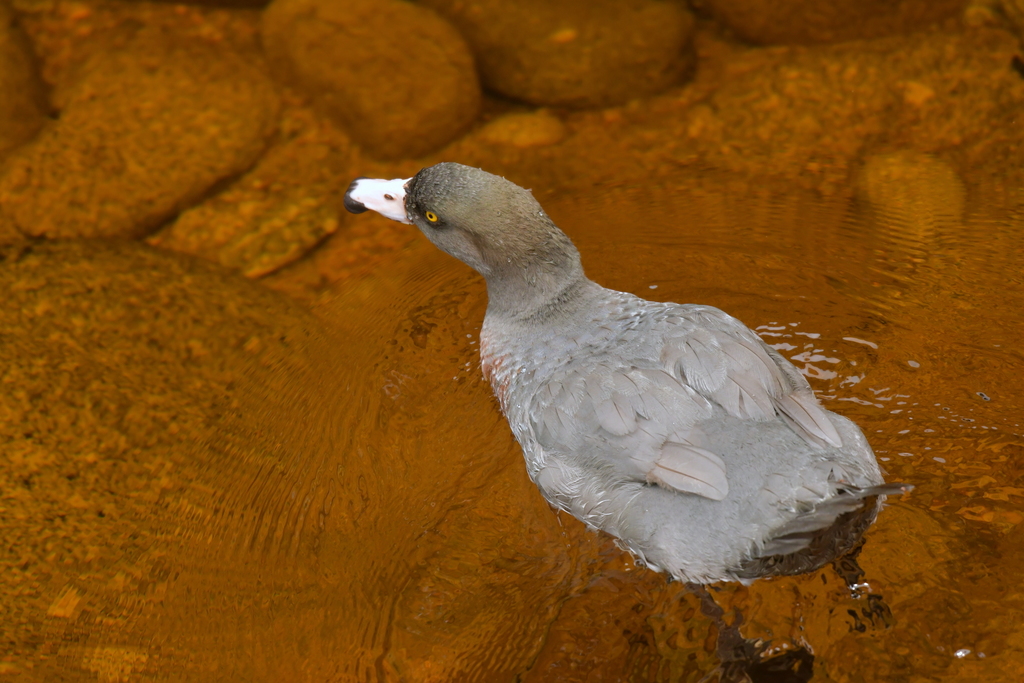
Blue Duck
Hymenolaimus malacorhynchos
Birdstrong against fish, reptiles
Epic
Swoop
While active with another bird in play, it hits 6 harder on its first attack after entering play (12 with two others).
44

52
Blue Duck
Hymenolaimus malacorhynchos
Birdstrong against fish, reptiles
Epic
While active with another bird in play, it hits 6 harder on its first attack after entering play (12 with two others).
Hymenolaimus malacorhynchos
Photo: © Christopher Stephens (original photo) · CC BY-SA 4.0 (licence text) · cropped
Strong against: it deals 20% more damage to them. Weak against: these types deal 20% more damage to it.
The blue duck (Hymenolaimus malacorhynchos) or whio is a member of the duck, goose and swan family, Anatidae and is endemic to New Zealand. It is the only individual species belonging to the genus Hymenolaimus. Its closest relatives are the ducks in the genus Sarkidiornis.
First seen and recorded by the British explorer, James Cook in his second voyage to New Zealand, its scientific name was given by the German naturalist, Johann Friedrich Gmelin in 1789 and later George Robert Gray in 1843. There are two subspecies of the blue duck, one in North Island and the other in South Island. Common to both gender, its physical characteristics include yellow iris, a pale grey beak with semicircular flaps and lamellae, dark-slate grey plumage, chestnut flecked breast, dark grey webbed feet, and well developed claws. The male blue duck has a high-pitched whistle, which gave its Māori name Whio, while the female has a low-pitched rattle.
The European voyages led to more human settlement in New Zealand, causing a loss of forests, and which started the decline of Blue duck in the country. It was last commonly seen in New Zealand in the 1950s following which stoat predation caused its further population decline and limiting it to only North and South Island. Geographically, it is found in clean and stable rivers which have a medium to steep gradient. It roosts close to the undercut of river banks, and can do breeding and moulting in more wider area having tributaries and small streams.
Abridged excerpt from the Wikipedia article Blue duck, by its authors, under the CC BY-SA 4.0 licence.
Endangered on the IUCN Red List: that’s what makes this card Epic.
Every Epic card has 145 points, shared between HP, ATK and DEF:
How they’re shared out:

 DEF 52